Moving Forward with AI Deployment in Physical Security
AI is no longer a future concept in physical security. The question has moved from whether to adopt it to how to deploy it in a way that improves outcomes, cuts noise, and strengthens human decision-making.
This session focuses on what security leaders need to weigh as they move from interest to deployment. We look at how AI reshapes the design of the security program itself: when concentric rings of access control still hold up, how to think about porous perimeters, and how to treat camera coverage as an operational asset rather than a forensic archive. We also explore the shift from video built for evidence to video built for action, and where drones, robots, and other response tools genuinely extend a security team.
The goal is not to remove people from the process. It is to give them better information, better options, and safer ways to act. The conversation closes on what it takes to move toward agentic AI with human governance, where the system can recommend, triage, escalate, and coordinate while security leaders keep clear policies, decision rights, audit trails, and accountability.
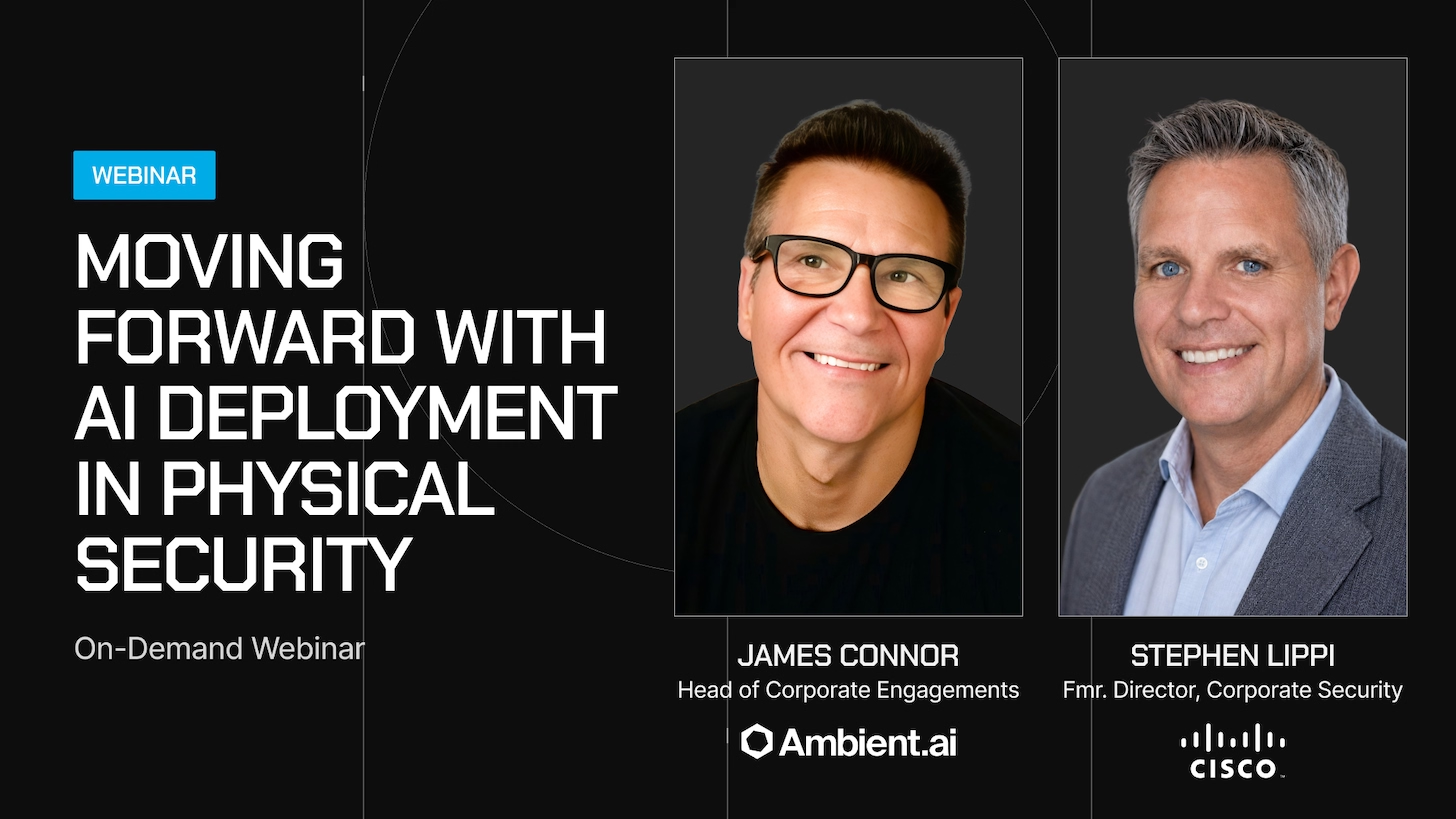
Join James Connor (Ambient.ai) and Stephen Lippi (Cisco) as they discuss:
- How AI changes the way teams think about prevention, detection, response, and investigation
- When access control rings and perimeter design still hold up, and when the risk model says otherwise
- Where drones and robots extend a security team, and what they need to succeed in production
- How to move toward agentic workflows that recommend, triage, and act while staying inside human control
- A practical path to assess readiness, find high-value use cases, and build a deployment roadmap
Accessible On Demand
00:00
/
00:00