False Positives Are Killing Physical Security: It's Time to Expect More from Your Physical Access Control Systems (PACS)


95% fewer false alarms. Zero changes to your infrastructure.
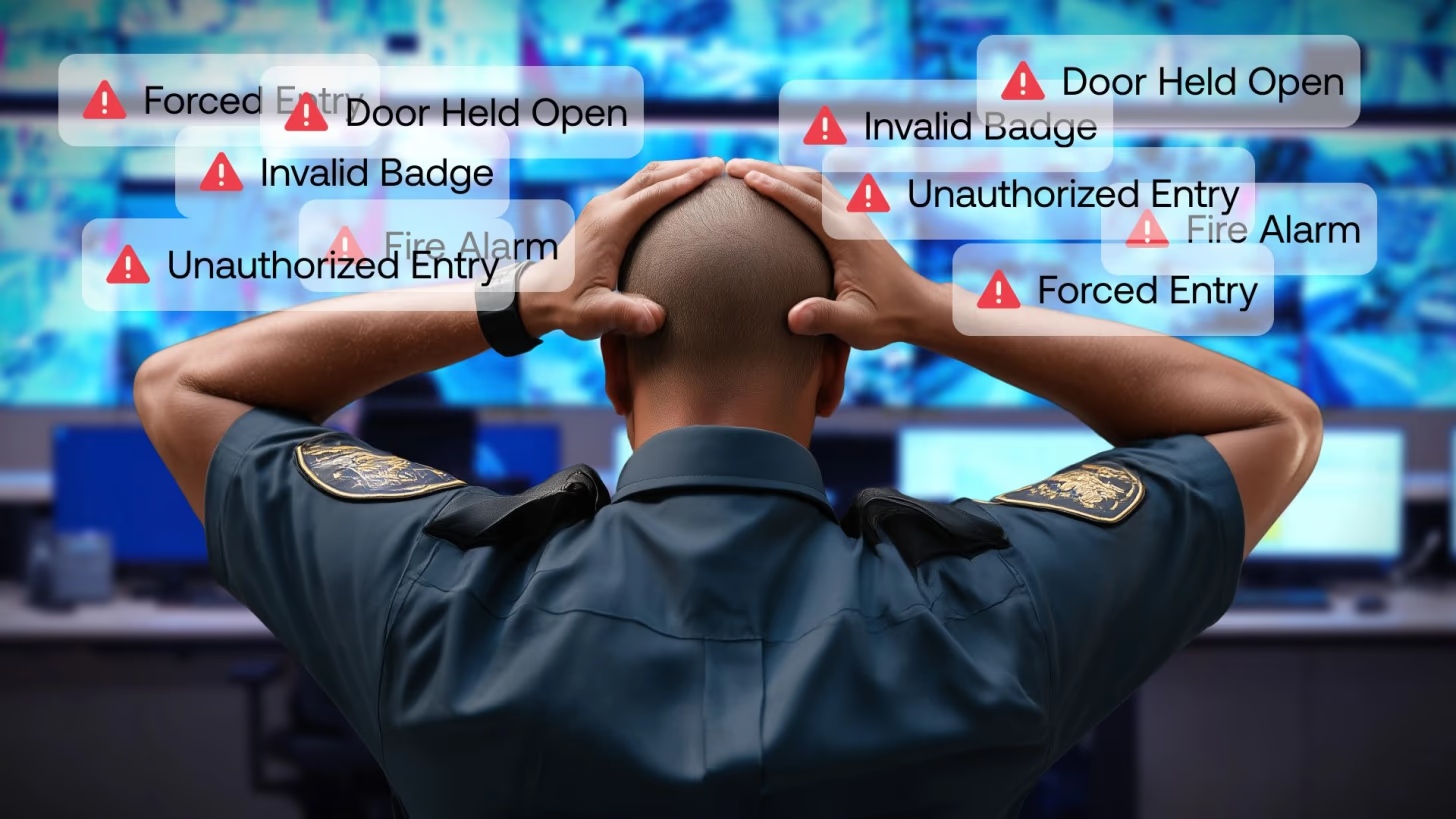
Every day, thousands of enterprise security professionals sit in front of multi-screen GSOC dashboards, watching video feeds light up with alerts. Motion detected. Door forced. Person detected. Alarm triggered.
And 95% of the time? It's nothing.
A shift in lighting, a squirrel in a loading bay, or a correctly used badge still triggering an "unauthorized entry" alert. These are false positives. And they're quietly destroying the effectiveness - and credibility - of physical security operations.
The Quiet Cost of Noise
False positives aren't just an annoyance; they are operationally and strategically dangerous. They create a constant state of "alert fatigue," a phenomenon all too familiar in cybersecurity that is now rampant in physical security. This incessant stream of meaningless alerts has a corrosive effect:
- Erodes Trust: When operators know that the vast majority of alerts are junk, they begin to tune them out. The system, designed to be their eyes and ears, becomes a source of white noise.
- Delays Response to Real Threats: Critical seconds are lost as security personnel are forced to manually filter the signal from the noise, trying to determine which flashing light on the screen warrants their attention.
- Wastes Resources: Every false positive triggers a wasteful cycle of manual investigations, unnecessary dispatches, and redundant reviews. For every 500 doors, organizations can waste over 8,000 hours a year clearing nuisance alarms.
If your team spends more time dismissing alerts than responding to them, your security system isn't truly providing security—it's performative.
The Root of the Problem: Legacy Analytics Paired with Sensors
Why is this still the norm? Because most video surveillance and access control systems today rely on technology that is fundamentally outdated. Magnetic contacts, basic motion detection, and simple pixel analysis are brittle, easily fooled, and lack any understanding of context. Consider these common scenarios:
- A door swings shut but doesn't fully latch. The magnetic contact registers it as "closed." Hours later, a slight gust of wind pushes it open. The system, lacking any real-world understanding, reports a "forced entry," and your team is now investigating a ghost threat.
- A "door held open" rule is set for a 90-second threshold. An employee holds the door for 91 seconds to assist a visitor with a cart. An alarm is triggered, logs are generated, and staff may even be dispatched—all for a routine, harmless event.
These legacy systems don't understand intent, context, or human oversight. They simply react to simplistic, binary inputs. The result is always the same: a flood of false alerts in PACS that no amount of layering rules or manual tweaking can truly fix.
A New Standard: Purpose-built AI for Physical Security
It's time to raise the bar. Security teams should demand AI systems that deliver less than a 1% false positive rate - not settle for "good enough" thresholds or vague promises on a dashboard.
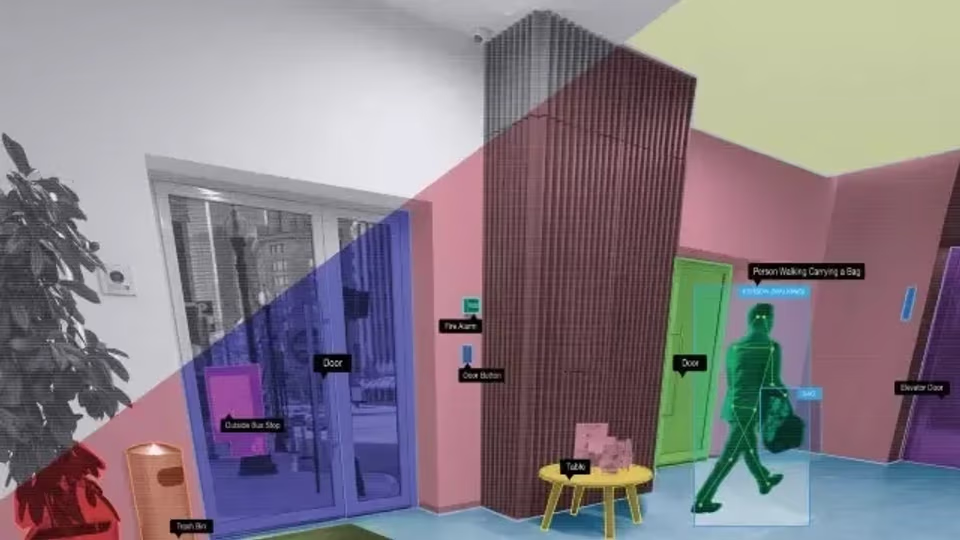
The new generation of computer vision-powered AI for access control, like the technology powering Ambient.ai, doesn't just "see" movement or changes in pixels. It understands context, behavior, and identity in real time. It can differentiate between a genuine threat and a benign anomaly. For example, our platform can discern:
- Was the person who entered a secured area authorized, or did they tailgate behind someone with legitimate access?
- Did the individual use their own badge, or did they follow someone in without presenting credentials?
- Is the observed behavior consistent with past patterns, or does it indicate a potential threat that requires immediate attention? This is the fundamental difference between mere surveillance and true intelligence.
Demand More from Your Security Stack
It's time to ask critical questions about your physical security technology:
- Do your alerts make your team faster and more precise, or just busier?
- Can your system distinguish a real intrusion from routine daily activity?
- Are you seeing a measurable reduction in false positives, or just an increase in the number of dashboards you need to monitor? If the answers to these questions are not a resounding "yes," then you are likely managing chaos, not security.
In the world of cybersecurity, no one would accept a tool that bombards their team with thousands of useless alerts. So why has this been acceptable in physical security for so long?
The future of physical security belongs to systems that think before they alert. It belongs to platforms that provide actionable intelligence, not just endless footage. It's about making your human operators smarter, more efficient, and more effective - not just busier.
This is precisely where Ambient Signals Intelligence transforms your security posture. Instead of simply forwarding raw alarms from sensors, it acts as an intelligent verification layer. Using patented computer vision technology, the platform continuously analyzes live video to validate every single access control event in real time.
False alarms—whether it's a door left ajar by accident or a sensor tripped by the wind—are automatically identified and cleared. Your SOC operators can finally stop chasing non-issues. Only real, verified alerts are escalated, delivered with clear video context that shows exactly what happened. This enables faster, more focused responses and allows your team to operate with confidence.
False positives are more than just an annoyance. They are a threat to your security posture. It's time we started treating them that way. With Ambient Signals Intelligence, you can finally cut through the noise and focus on what truly matters.