Why Manual Forensic Video Analysis Is Becoming Obsolete


It's not a people problem. It's a systems problem.
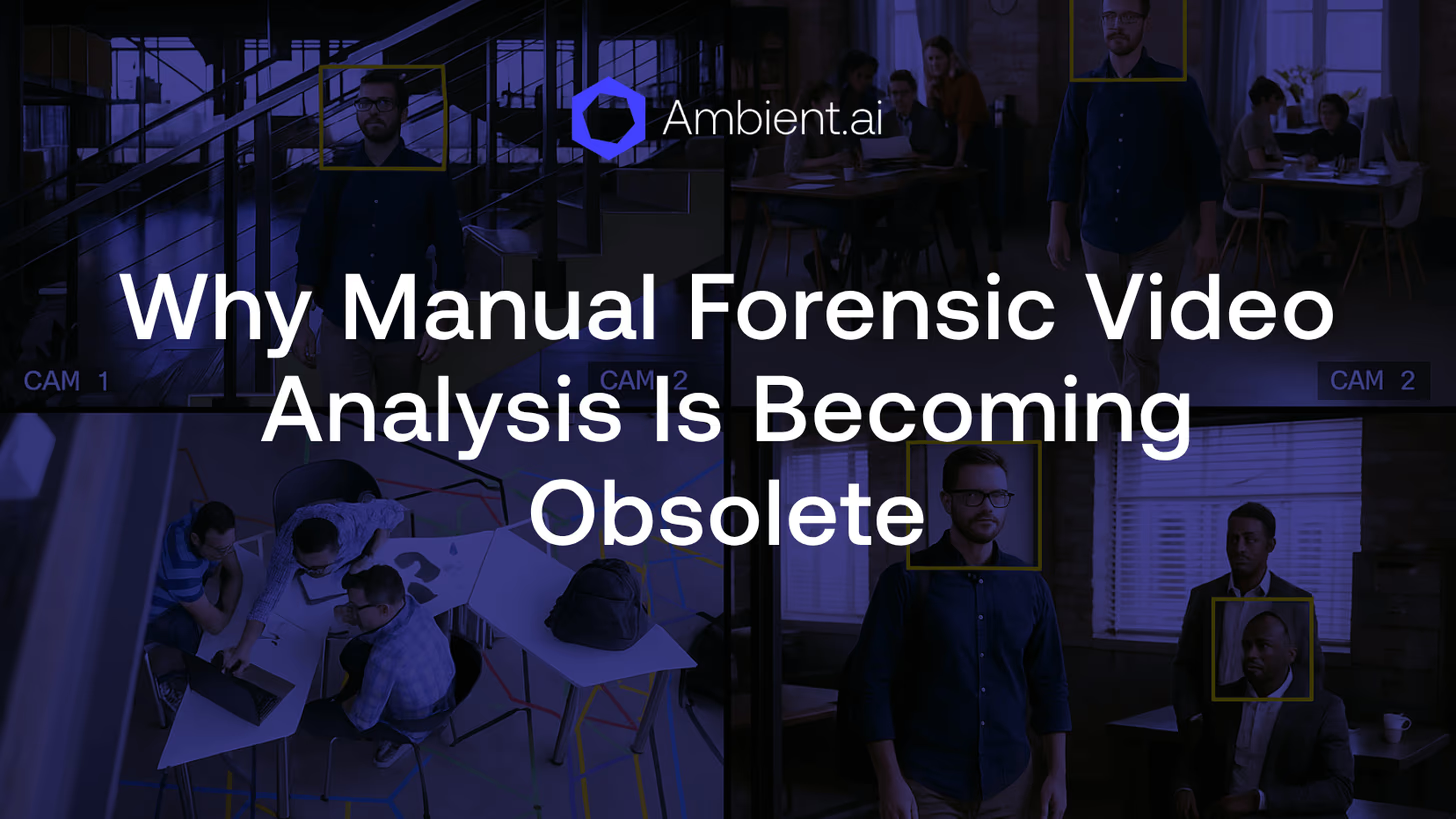
When an incident occurs, the investigation clock starts. Security analysts open timelines across thousands of cameras, accelerate playback, jot timestamps, switch between feeds, and repeat until vision blurs. They review one camera at a time, unable to search for specific descriptions like "person in red jacket carrying backpack" across the entire estate. Organizations capture terabytes of video daily, yet the process remains the same: guess which clips might contain crucial evidence, then scrub through footage until something surfaces.
Cognitive fatigue accumulates fast. Subtle details disappear: altered license plates, suspects switching jackets, behavioral patterns that break cases. The time penalty is brutal. Each day spent reviewing a single timeline delays other investigations, stretching resolution from hours to weeks. Meanwhile, alarms keep queuing, stakeholders grow impatient, and backlogs deepen.
Manual review isn't just slow. It's the bottleneck throttling every downstream security function, creating a fundamental mismatch between investigation demands and human limitations that grows worse as camera networks expand.
Why Manual Forensic Workflows Collapse at Scale
The fundamental problem extends beyond volume. Forensic video analysis evolved from VCR reviews to digital systems, but the process remained manual. Investigators still scrub timeline bars, still review sequentially, and they still miss connections across cameras. The tools changed, the burden didn't.
Sequential review prevents pattern recognition. Investigators examining Thursday's tailgating incident won't connect it to Monday's perimeter breach because they review one camera at a time, never viewing both feeds simultaneously. When a suspect description emerges, there's no way to search for it. Investigators must watch hours of footage, hoping to spot the match.
Technical friction compounds the overload. Proprietary DVR formats force conversions that risk data loss. Multi-camera correlation demands manual cross-referencing, tasks that balloon investigation time and jeopardize chain-of-custody integrity.
As the case queues expand, sampling footage replaces full reviews, creating blind spots where critical evidence hides. Without automation, the workflow collapses under its own weight, leaving backlogs, missed leads, and eroded confidence in the security operation.
How Emerging AI Approaches Address Investigation Bottlenecks
AI is shifting investigations from manual timeline reconstruction to direct retrieval of relevant evidence. Instead of stepping through footage frame by frame, operators can ask questions and receive targeted answers on the first query.
Natural Language Video Search
Computer vision indexing paired with language models enables video to be searched semantically. A query like "show me when a person placed a bag under a bench" becomes an instruction the system interprets directly rather than a set of keywords to match.
Cross-Camera Subject Tracking Approaches
Advances in re-identification are making it possible to follow a person or object across non-overlapping camera views without stitching footage together by hand. Workflows that used to take hours begin to collapse into automatically generated paths and timelines.
Contextual Behavior Recognition Technologies
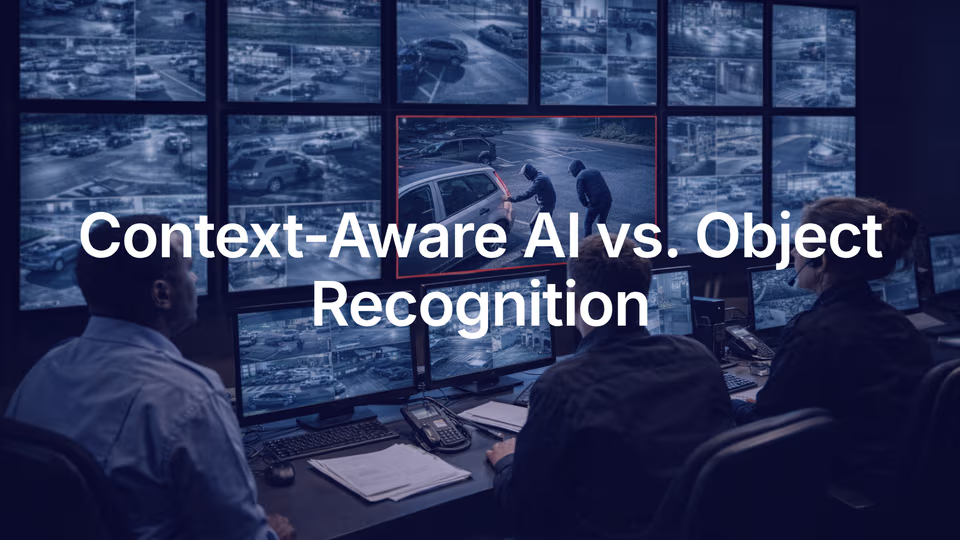
Next-generation AI focuses on understanding scenes, not just detecting objects. Models attempt to distinguish a routine action from a threatening one — separating a person photographing architecture at noon from someone photographing entry points and security cameras at dusk. These contextual cues aim to reduce the flood of irrelevant alerts that operators face, though accuracy and reliability are still maturing.
Real-Time Investigation Capabilities
New methods explore running these engines directly on live streams. During an unfolding event, operators could ask targeted questions like "show activity heading toward the west gate right now" to guide response teams before damage occurs.
Addressing the Investigation Bottleneck
The promise of AI-powered forensic video analysis becomes practical when the technology reliably delivers on the core capabilities outlined in this article. Ambient.ai approaches this challenge by applying Vision-Language Models and Real-Time Indexing to transform existing security infrastructure into searchable intelligence.
Ambient Foundation, the AI-native VMS from Ambient.ai, enables rapid investigations across thousands of cameras using natural language search. What once took days of manual review now takes seconds. Operators query using everyday language like "person in red shirt" or "person carrying blue backpack on second floor yesterday at 1 PM," instantly retrieving relevant clips across cameras simultaneously. The platform automatically generates incident timelines and case reports, allowing investigations to unfold in real time.
Ambient Advanced Forensics addresses the pattern recognition gap created by sequential review. Similarity search allows investigators to select a person or object of interest and instantly find every appearance across the camera network — eliminating the need to manually track subjects through sequential footage review. License plate recognition extends this capability to vehicles, enabling rapid identification and tracking across facility perimeters and parking areas. The platform stitches together subject paths across non-overlapping camera fields, creating unified timelines with timestamps and audit trails ready for legal use.
The platform also understands behavior through contextual reasoning rather than simple object detection, differentiating between routine activities and genuine security concerns for proactive security incident detection, integrated with existing infrastructure without hardware replacement.
The shift from manual timeline scrubbing to searchable intelligence returns hundreds of investigator hours to proactive work, enabling security operations to scale with camera networks rather than collapse under their weight. Book a demo to learn how to implement it in your organization.
Key Takeaways
- Manual forensic review is the bottleneck, throttling every downstream security function. Investigators review one camera at a time, unable to search for specific descriptions across thousands of feeds, stretching resolution from hours to weeks while case backlogs deepen.
- Sequential review prevents pattern recognition across incidents. Investigators examining Thursday's tailgating incident won't connect it to Monday's perimeter breach because they never view both feeds simultaneously, missing connections that could break cases.
- Natural language search transforms investigations from timeline scrubbing to direct evidence retrieval. Operators query using everyday language and receive relevant clips across cameras instantly, compressing days of manual review into seconds.
- Similarity search and cross-camera tracking eliminate the manual burden of following subjects. Investigators select a person or vehicle of interest and instantly find every appearance across the camera network, with unified timelines and audit trails ready for legal use.