The Second Act of Computer Vision Intelligence: Vision Ops


90%+ alerts resolved in under a minute. See how.
Computer vision has already reshaped physical security, making AI-powered video analytics a key tool for improving surveillance, detecting threats, and cutting down on operational costs. But we’re just getting started.
Now, we’re moving into the next phase: Vision Ops. This is where computer vision goes beyond just being a useful tool—it becomes the foundation of a fully integrated security strategy. Vision Ops is about embedding AI into security operations in a way that’s structured, proactive, and intelligent. It takes security systems beyond simple monitoring and moves them closer toward full autonomy.
Bringing AI to the Forefront of Security Operations
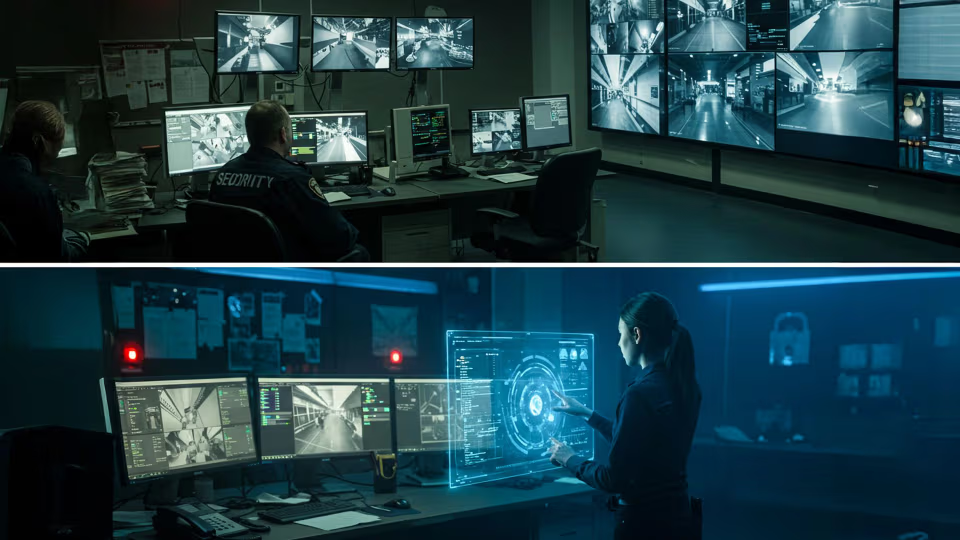
In the first wave of AI adoption, the focus was on getting computer vision into security operations—integrating it with surveillance systems, training teams, and proving its value in identifying potential threats. That was an important step, but it didn’t go far enough.
The challenge? Many organizations still rely on human operators to interpret alerts, make decisions, and manually respond to security incidents. This approach leaves AI underutilized, leading to inefficiencies, inconsistent threat response, and missed opportunities for automation.
Vision Ops changes the game. It transforms AI from a passive tool into an active security operator—one that can assess risks, make decisions, and take action in real time.
Vision Ops isn’t just an add-on for video analytics. It serves as the framework that connects all key components of modern security: video surveillance, access control, alarms, visitor management, and building automation.
The Five Pillars of Vision Ops
1. Autonomous Decision-Making
Traditional security models depend on human operators to evaluate every potential threat, which creates bottlenecks and slows response times. Vision Ops eliminates these roadblocks through AI-driven decision-making.
- AI can classify security events and assess risks in real time.
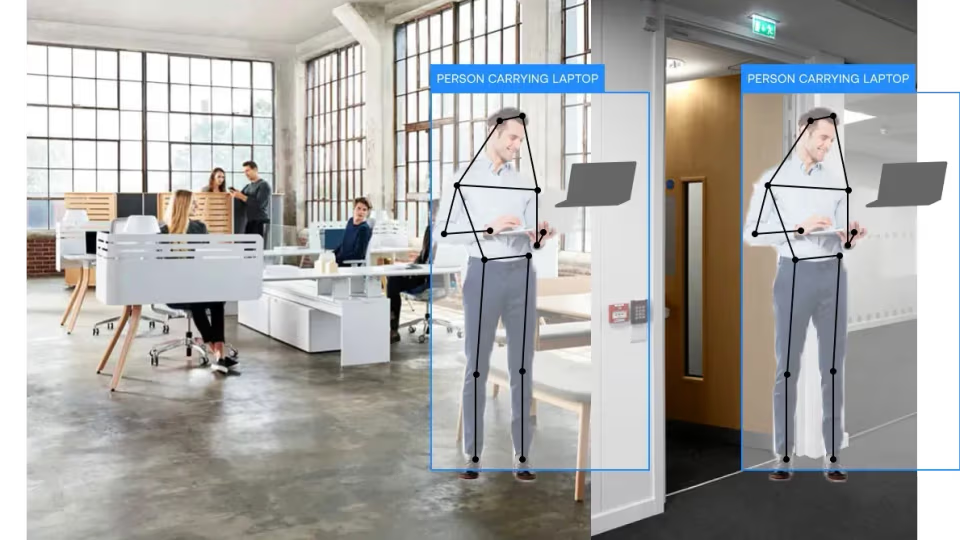
- Routine security decisions—like identifying unauthorized access, recognizing loitering, or escalating critical incidents—are handled automatically.
- Security teams can shift their focus to high-priority incidents rather than drowning in alerts.
The result? Faster, more precise threat response and a more efficient security operation.
2. Real-Time Threat Prevention
Security has historically been reactive—investigating incidents only after they’ve occurred. Vision Ops changes that by enabling proactive security.
- AI recognizes patterns and detects potential threats before they escalate.
- It identifies early warning signs like unauthorized access attempts or unusual behavior, allowing teams to intervene before an incident happens.
- By staying ahead of threats, organizations can minimize disruptions and create a safer environment.
3. Dynamic Situational Awareness
Vision Ops integrates AI across multiple security layers, creating a fully connected and context-aware security ecosystem.
- AI analyzes data from various sources, including video analytics, access control, environmental sensors, and alarm systems.
- Instead of simply flagging individual events, it correlates data across multiple inputs, providing a clear and comprehensive picture of security risks.
- Security teams gain real-time situational awareness, allowing them to make better, faster decisions.
4. Seamless Integration with Enterprise Security
One of the biggest barriers to AI adoption has been disconnected security systems—where video surveillance, access control, and alarm monitoring operate in silos. Vision Ops removes these silos by ensuring full interoperability across security infrastructure.
- AI insights can trigger automatic access control actions, notify personnel, and integrate with incident response workflows.
- Security events become part of an interconnected security strategy instead of remaining isolated incidents.
- The result is a more cohesive, efficient, and resilient security operation.
5. Adaptive and Scalable Security Solutions
Security threats are constantly evolving, and Vision Ops is designed to evolve with them.
- AI adapts to new risks and security challenges without the need for constant manual updates.
- Organizations can scale their security operations—from a single facility to a global enterprise—without overhauling existing infrastructure.
- Vision Ops ensures security strategies remain flexible, future-proof, and effective in an ever-changing landscape.
How to Transition to Vision Ops
Shifting to Vision Ops isn’t just about upgrading technology—it requires a mindset shift within security teams and leadership. Here’s how organizations can make the transition:
- Assess Current AI Capabilities – Take stock of how AI is currently being used and identify areas where automation and decision-making can be improved.
- Integrate AI with Core Security Workflows – Ensure that AI-driven insights are fully actionable within existing security infrastructure, including access control, incident response, and emergency protocols.
- Implement AI Autonomy Gradually – Start by automating routine tasks, then progressively expand AI’s role in decision-making and incident response.
- Train Security Teams on AI Utilization – Equip teams with the knowledge to use AI-driven insights for enhanced situational awareness and decision support.
- Commit to Continuous Improvement – AI security systems need to evolve over time. Regular updates, retraining, and fine-tuning are essential for staying ahead of new threats.
The Future of Security is Here
The first phase of computer vision intelligence demonstrated AI’s capabilities. With Vision Ops, organizations can take the next step by unlocking its full potential.
Companies that adopt Vision Ops will advance beyond reactive security and embrace a future of intelligent, autonomous protection. The key to modern security isn’t just detecting threats—it’s actively preventing them.
Now is the time for security leaders to operationalize AI, integrate it into their security strategies, and take the next step toward a smarter, safer future.