Weapons Detection Systems: Beyond CCTV


90%+ alerts resolved in under a minute. See how.
Weapons Detection Systems: Beyond Traditional CCTV to Proactive AI Security
CCTV systems excel at recording events, providing detailed forensic evidence for post-incident investigations. However, live monitoring presents inherent challenges like security operators needing to watch multiple video streams while remaining alert for brief moments that may indicate threats.
Weapons detection systems add AI analysis to existing camera infrastructure, automatically identifying firearms and other weapons in real time. This approach transforms routine surveillance cameras into active monitoring tools that can alert operators immediately when weapons are detected.
How Traditional CCTV Cameras Limit Threat Response
CCTV systems excel at capturing high-quality footage for investigations, but human operators face cognitive limits that can create dangerous blind spots during live monitoring.
Human Attention Limitations
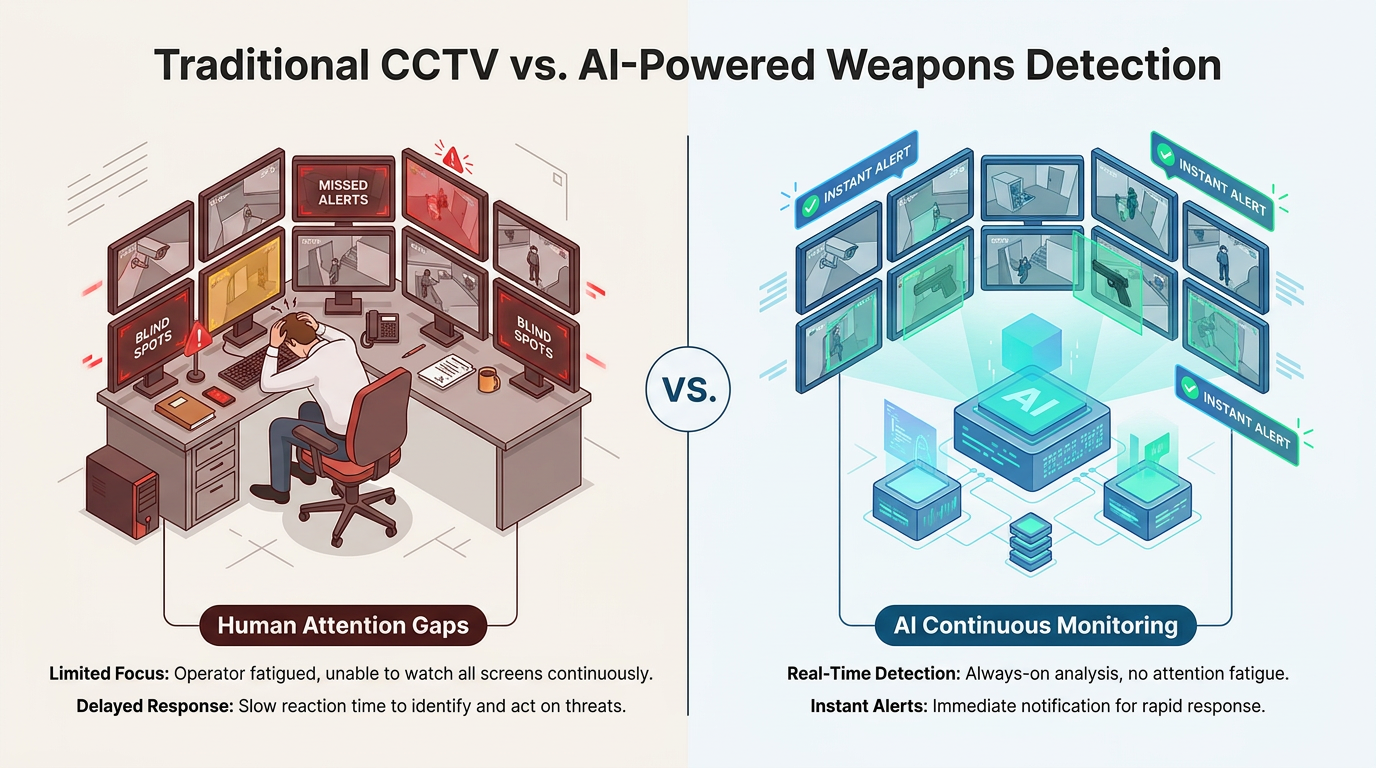
Even dedicated operators miss critical events when monitoring multiple feeds. A weapon can appear and disappear in seconds while an operator checks another screen or reviews an access control alert.
Cameras record everything, but without intelligent analysis, threats often go unnoticed until after an incident occurs. Post-event investigations provide excellent forensic evidence, but can't prevent violence.
Motion Detection Alert Fatigue
Basic motion sensors trigger on cleaning crews, weather changes, and routine activities. Global Security Operations Center (GSOC) teams spend significant time clearing false alarms instead of focusing on genuine threats. This alert fatigue leads to delayed responses when actual weapons appear on feeds.
These false alerts happen because traditional motion analytics technology lacks context. Which means they can't distinguish between a maintenance worker carrying tools and someone brandishing a weapon. Every movement generates an alert that requires manual verification.
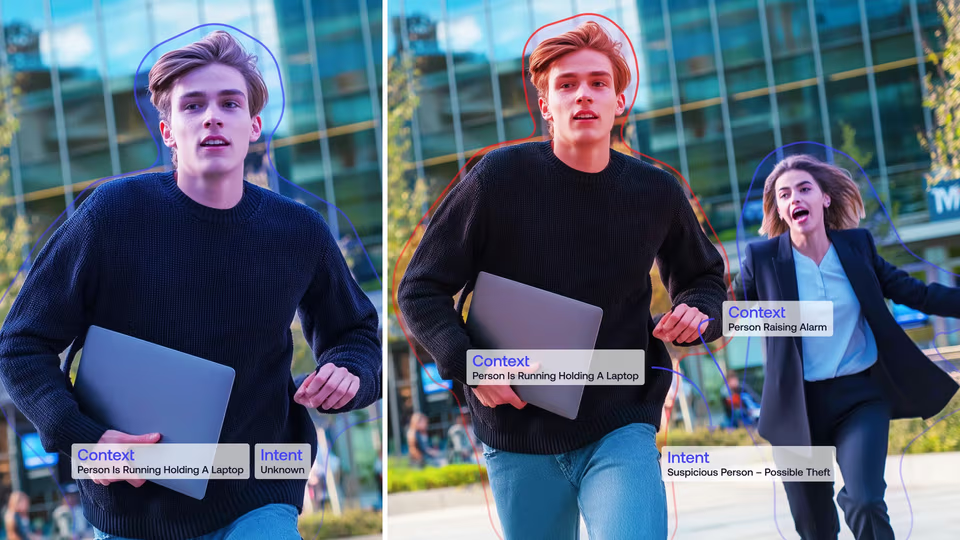
One of Ambient.ai's primary technologies is context awareness and behavioral analysis. This produces more accurate weapons detection signals and fewer false alarms.
Operational Resource Constraints
Security teams often manage coverage across multiple shifts and locations with limited personnel. Manual monitoring requires continuous staffing to maintain effective surveillance, which creates scheduling challenges and coverage gaps during shift changes or personnel shortages.
Budget constraints frequently limit the number of operators available for live monitoring. Organizations must balance security staffing costs against other operational priorities, sometimes resulting in reduced monitoring coverage during certain periods.
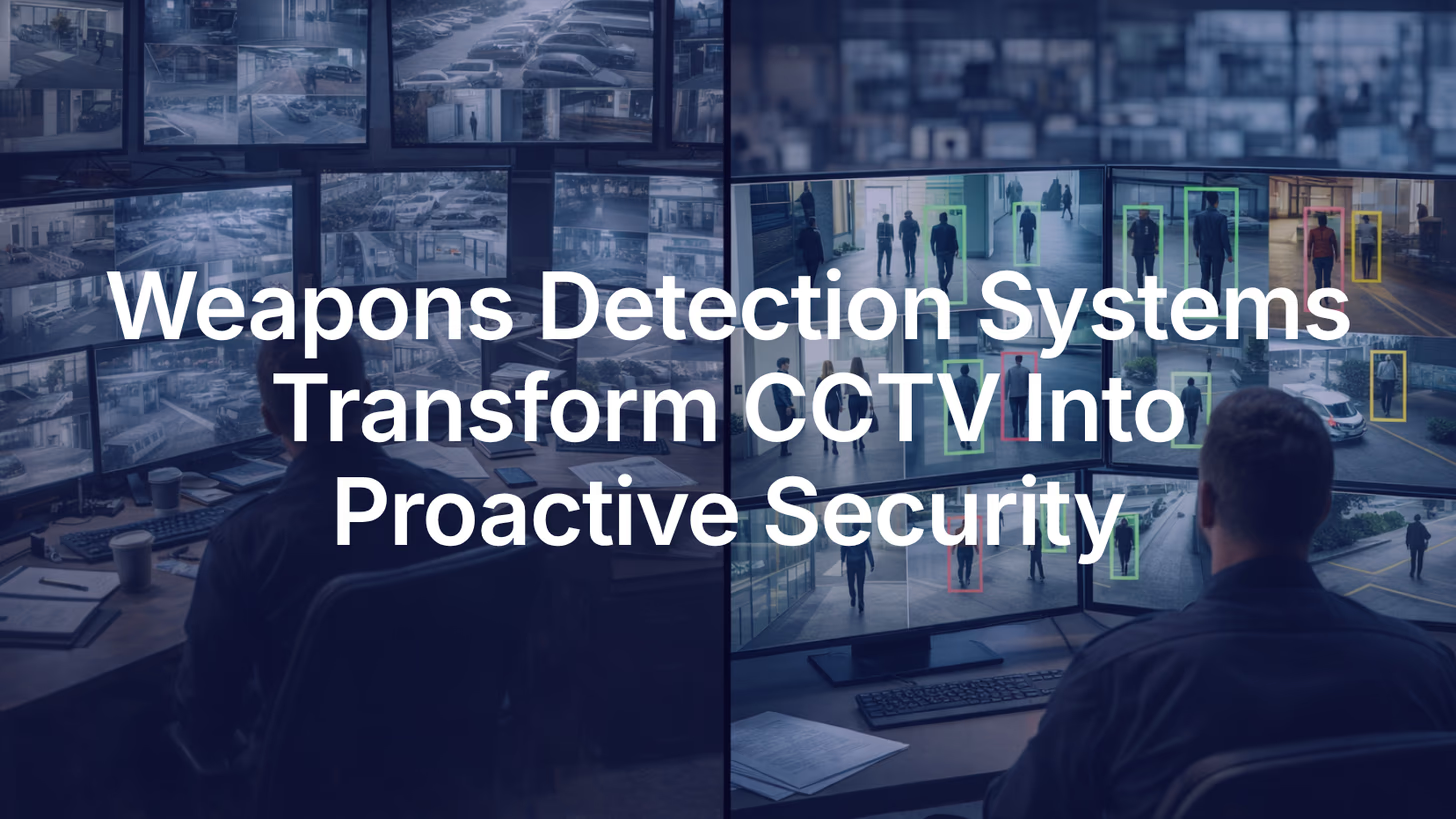
Weapons Detection Systems Transform CCTV into Proactive Security
AI-powered weapons detection systems analyze your existing camera feeds in real time, identifying firearms and other weapons while filtering out false triggers. This transforms passive surveillance into active threat prevention without replacing your current infrastructure.
Real-Time Threat Recognition
Computer vision models examine frames from your cameras, comparing visual data against trained weapon signatures and detecting handguns, rifles, and knives; some research and vendor materials report detection under varied lighting and partial occlusion, though performance generally degrades when weapons are partially obscured or only briefly visible.
The AI runs continuously without fatigue, processing many camera feeds simultaneously. When a weapon is identified, the system immediately alerts operators with annotated video showing the exact threat location and type.
Context-Aware Analysis Reduces False Alarms
Advanced weapons detection systems understand environmental context. A knife in a cafeteria kitchen generates no alert, while the same object in a conference room triggers immediate notification, helping reduce false positives by focusing on contextually inappropriate threats rather than basic motion alone.
The systems learn from confirmed threats, continuously refining detection accuracy. Operators spend less time clearing ghost alerts and more time coordinating responses to verified weapons threats.
Seamless Integration with Existing Systems
Weapons detection software integrates with your current VMS platforms, including Genetec, Milestone, and Lenel. The AI layer processes video streams without requiring new cameras or infrastructure replacement.
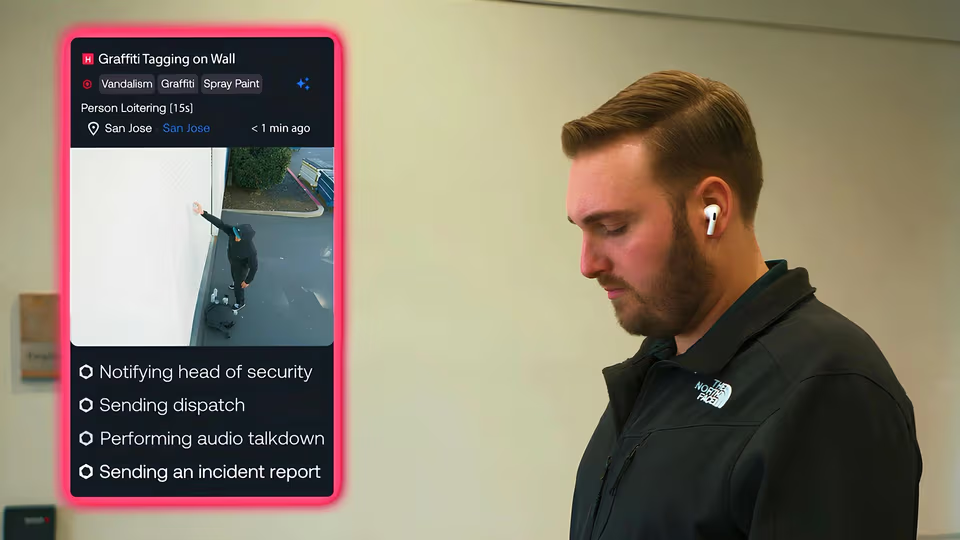
When a weapon is detected, the system can generate alerts and support response workflows that extend beyond simple notification.
From Reactive Investigation to Proactive Prevention
The fundamental difference between traditional CCTV and intelligent weapons detection systems lies in timing. CCTV provides post-incident evidence, while AI systems enable pre-incident intervention.
Detection Speed Advantages
Human operators typically identify threats during footage review, often hours or days after events occur. AI systems flag weapons within seconds of appearance, creating opportunities for intervention while situations remain manageable.
When integrated with access control and notification systems, automated lockdown procedures can be triggered quickly in response to weapons detection alerts. This speed advantage can mean the difference between containment and casualties.
Operational Efficiency Gains
Security teams report significant reductions in time spent reviewing irrelevant footage. AI pre-filters video streams, presenting only high-confidence weapon detections for human verification. Operators can focus on threat assessment and response coordination rather than manual surveillance monitoring.
GSOC workstations display verified threats with location context, timestamp information, and suggested response protocols. This transforms raw video data into actionable security intelligence.
Weapons Detection in Practice
Organizations across multiple sectors use AI-enhanced camera systems to detect weapons while maintaining operational efficiency and visitor experience.
Corporate campuses monitor entryways and common areas without implementing invasive screening procedures. Educational institutions protect students and staff while preserving open campus environments. Healthcare facilities balance security requirements with patient care priorities.
Manufacturing sites and critical infrastructure facilities combine perimeter monitoring with access control verification. When sensors detect fence tampering, AI reviews corresponding camera feeds to determine if intruders carry weapons before dispatching response teams.
The deployment pattern remains consistent across different environments. Organizations enhance existing cameras with intelligent analysis, integrate with current security systems, and establish clear protocols for threat verification and response.
Implementation Strategy for Weapons Detection Systems
Deploy a modern weapons detection system successfully by assessing your current infrastructure, training your security operators, and continuously monitoring performance. Each phase addresses specific technical and operational requirements.
Assess Your Current Infrastructure
Evaluate existing camera coverage for blind spots and image quality limitations. Standard 1080p HD cameras provide sufficient resolution for accurate weapon detection, distinguishing between similar objects like laptops and handguns. Most networks can handle the two to five Mbps bandwidth requirements without upgrades.
Configure cameras with a minimum 1/80th shutter speed (1/250th optimal) and adequate lighting. Some older cameras may require upgrades for the best performance.
Review VMS and access control systems for API integration capabilities. Plan integration points where weapon detection alerts trigger door locks, notification systems, and emergency protocols.
Train Operators on Procedures and Response Protocols
Train operators on alert verification procedures and response protocols. AI provides high-confidence weapon detections, but human verification remains essential before activating emergency responses. Practice scenarios help teams distinguish between actual threats and false positives.
Establish clear escalation procedures for different threat types and locations. Armed individuals in parking areas require different responses than weapons detected in administrative offices. Coordinate with local law enforcement to ensure they understand your AI alert procedures.
Monitor Performance
Track key metrics including detection accuracy, response times, and false alarm rates. Quality weapons detection systems achieve very low false positive rates while maintaining high sensitivity to actual threats.
Monitor system performance across different lighting conditions, seasons, and operational scenarios. Regular assessment helps optimize detection thresholds and improve overall security effectiveness.
Transform Your Cameras into Active Threat Detection
Weapons detection systems solve the gap between passive surveillance and active threat prevention by adding AI intelligence that transforms existing surveillance infrastructure into real-time security monitoring.
Intelligent weapons detection systems enhance human judgment to achieve the following results:
- Faster threat detection
- Reduced false alarms
- Coordinated response capabilities
They enable security teams to shift from reactive investigation to proactive threat prevention while working with the camera systems they already own.
In other words, AI handles continuous monitoring and initial threat identification, while operators focus on verification and response coordination. This combination delivers more effective security with existing resources.
Discover how AI-powered weapons detection transforms your current camera infrastructure into an intelligent threat prevention system. Schedule a demo to see weapons detection working with your existing CCTV cameras.
Frequently Asked Questions
What are the minimum camera resolution and hardware requirements for implementing an AI weapons detection system on existing CCTV infrastructure?
Standard HD cameras with 1080p resolution meet detection requirements. Network bandwidth needs range from two to five Mbps per stream. Configure cameras with 1/80th minimum shutter speed, though 1/250th delivers optimal performance. Adequate lighting ensures consistent accuracy across monitoring conditions.
How do AI weapons detection systems differentiate between everyday objects like tools or umbrellas and actual weapons to minimize false positives?
AI weapons detection uses computer vision trained on weapon datasets to identify firearm shapes and profiles. Contextual reasoning analyzes object location, carrying position, and behavioral cues to refine accuracy and reduce false alerts from similar objects.
How does an AI weapons detection system integrate with access control and mass notification systems to automate lockdown procedures during a threat?
AI weapons detection systems connect via API to access control and mass notification platforms. Upon detecting a weapon, the system automatically locks doors, activates announcements, and notifies personnel, creating coordinated containment without manual intervention.