How AI Transforms Manufacturing Plant Security from Reactive to Proactive


It's not a people problem. It's a systems problem.
Manufacturing plant security has long relied on cameras, access control, and perimeter barriers to protect equipment, inventory, and personnel. But manufacturing facilities span large footprints with multiple buildings, outdoor areas, and complex perimeters, generating overwhelming alarm volumes.
Traditional security systems respond after incidents occur, reviewing footage of completed thefts or investigating unauthorized access after the fact. AI-powered plant security transforms a reactive approach into a proactive one, detecting threats before incidents occur through contextual evaluation.
Key Takeaways
- Traditional manufacturing security systems remain reactive because they generate overwhelming false alarm volumes that operators cannot effectively monitor in real time
- Contextual intelligence transforms security by analyzing behavior and environmental context to distinguish genuine threats from routine manufacturing activity
- Video and PACS integration enables automatic validation of access events, suppressing nuisance alarms while ensuring legitimate threats receive immediate attention
- Proactive threat detection identifies behavioral precursors like loitering and reconnaissance before incidents escalate into theft, sabotage, or violence
What Do Manufacturing Plant Security Systems Protect?
In addition to workplace safety and weapon detection, manufacturing plant security requires strong perimeter defenses, physical access control, video monitoring, and trained personnel to protect production equipment, raw materials, finished goods, intellectual property, and employees from theft, sabotage, and unauthorized access.
Keeping the Perimeter Secure
Fencing, gates, barriers, and exterior lighting create physical obstacles around production facilities.
Controlling Who Gets In
Badge readers, biometric scanners, and visitor management systems restrict entry to authorized personnel while generating logs of movement patterns across facilities. High-value areas require additional authentication layers.
Eyes on the Facility
Camera networks provide visual coverage of entry points, production floors, warehouses, and perimeters while intrusion alarms and fire detection systems alert operators to potential emergencies. The challenge lies in extracting meaningful intelligence from continuous video streams.
What Threats Are Manufacturing Facilities Up Against?
Manufacturing facilities face distinct physical security threats, each requiring different detection approaches and response protocols.
Thieves and Intruders from Outside
Cargo theft targeting raw materials, finished products, and equipment represents significant financial risk. Average stolen shipment values continue to rise, indicating more sophisticated reconnaissance operations targeting high-value goods.
Detection capabilities such as Person Carrying Package, Person Carrying Suitcase/Bag, and Vehicle Parked without Person Exiting help identify suspicious activity at loading docks and storage areas before theft occurs.
Sprawling facilities with multiple access points create opportunities for unauthorized entry. Perimeter vulnerabilities manifest through blind spots between coverage zones, allowing perpetrators to enter and exit before security teams can respond.
Loading docks during off-hours and fence lines adjacent to public access points present the greatest risk. Bus/Truck in Restricted Area detection identifies unauthorized vehicles accessing production zones, while Person Loitering Outside Gate [15s] flags suspicious activity at perimeter entry points.
When the Threat Comes from Inside
Employees or contractors with legitimate credentials can steal inventory, damage equipment, or compromise trade secrets. Behavioral indicators include accessing areas outside normal work zones, removing items without following checkout procedures, and unusual visit patterns to sensitive equipment. Person Removing Item and Person Removing Suitcase/Bag detections identify inventory theft in progress.
Credential-based systems fail because authorized access doesn't automatically mean authorized activity. The context of when, where, and how someone uses their credentials determines whether the behavior is legitimate.
Manufacturing facilities face increasing threats from targeted sabotage designed to disrupt production capabilities, damage equipment, or cause operational shutdowns. These evolving threats require detection capabilities that go beyond traditional PACS to identify behavioral precursors before incidents occur.
Person Running detection serves as a behavioral precursor to theft attempts or emergency situations requiring immediate response. Lone Worker Presence detection monitors isolated areas common in manufacturing facilities where employees may face elevated risk.
Keeping Workers Safe from Violence
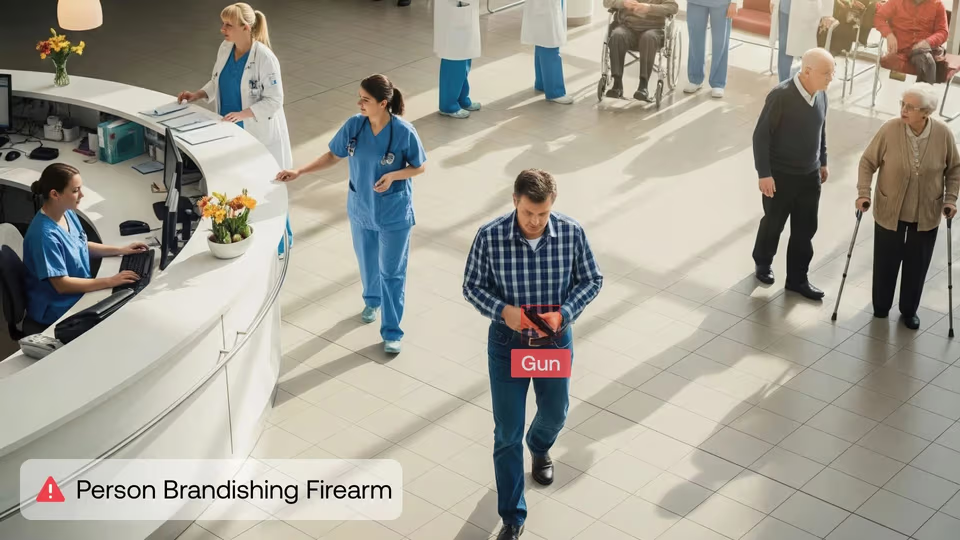
71.6 percent of workplace violence incidents resulted in at least one day away from work with a median of 7 days away. Manufacturing facilities with large workforces and high-stress environments require threat detection capabilities for unauthorized weapons, escalating confrontations, and workplace conflicts that can disrupt operations and endanger personnel. Person Brandishing Firearm detection enables immediate response to active threat situations.
Why Traditional Manufacturing Plant Security Stays Reactive
Conventional systems generate alerts and record footage, but lack the intelligence to interpret what those signals mean. Motion detection triggers on any movement. Door sensors report events without visual context. Cameras capture footage that operators cannot review in real time given volume constraints.
Too Many Alerts, Not Enough Attention
Security teams are drowning in video feeds and alarms with more than 98% false alarm rates, leading to operator fatigue and missed critical incidents. This volume creates alert fatigue that leads to desensitization and reduced responsiveness to actual security incidents.
Most Footage Never Gets Watched
Less than 1% of surveillance video is watched live, leaving the vast majority of camera feeds unmonitored until after incidents occur. Research shows that after twenty minutes of observing one screen, operators may overlook 90% of what is happening in the monitored area. Manufacturing facilities with hundreds of cameras cannot rely on human attention alone.
The limitation is not operator skill or dedication but fundamental cognitive constraints. Vigilance degrades measurably during continuous monitoring tasks, with degradation particularly severe during night shifts common to around-the-clock manufacturing operations.
Finding and Keeping Good People Is Hard
Guard turnover rates exceeding 40% create persistent gaps in security coverage and institutional knowledge. High turnover means continuous training cycles, inconsistent threat recognition, and vulnerability during transition periods when new personnel are learning facility-specific protocols.
What AI Changes in Manufacturing Plant Security
Contextual threat analysis can shift manufacturing security from passive recording to active understanding. Instead of simply detecting motion or objects, intelligent systems can analyze behavior, evaluate context, and distinguish genuine threats from routine activity.
Understanding Context, Not Just Motion
Contextual intelligence can evaluate whether detected activity represents actual risk by analyzing location, time, behavior patterns, and environmental context. A person near a restricted door during shift change carries different significance than the same person during late-night hours outside scheduled work periods.
Spotting Trouble Before It Happens
Loitering near entry points, testing access readers, unusual movement patterns along perimeters, and reconnaissance behavior often precede theft or intrusion attempts. Vision-Language Models can recognize these behavioral patterns before incidents escalate. Person Loitering [15s], [30s], and [45s] detection variants provide escalating alerts based on duration, enabling proportionate response to reconnaissance behavior.
Detecting these behavioral patterns creates intervention opportunities before incidents occur. Precursor behaviors differ from normal activity in distinct ways: repeated testing of doors versus a single access denial, lingering with apparent observation versus purposeful movement through an area.
When precursors are detected, security teams can deploy personnel for verbal challenge or visible presence that deters progression to actual incidents. Early detection enables intelligence gathering and pattern recognition across multiple events, helping security teams identify organized theft rings or persistent threat actors before they succeed.
Connecting Video with Access Control Data
Video surveillance integrated with PACS badge readers, shift schedule data, and authorized location parameters can automatically validate whether alerts represent genuine security events or authorized activities. This multi-source correlation reduces false alarm investigations while ensuring legitimate threats receive immediate attention. Door Forced Open and Door Propped Open detections identify genuine access violations, while Door Propped Open [Access Verified] distinguishes authorized door-holding from security breaches.
By cross-referencing badge data, employee authorization levels, and shift schedules against live camera feeds, intelligent systems can distinguish between an employee holding a door for a colleague during authorized hours and an unauthorized tailgating attempt outside scheduled work periods. Tailgating [Access Verified] and Invalid Badge Followed by Tailgate detections identify both authorized door-holding scenarios and unauthorized access attempts requiring intervention.
These integrated systems can automatically suppress nuisance alarms before reaching human operators, enabling security teams to focus exclusively on genuine threats. This capability is particularly valuable during shift changes when authorized personnel movement peaks and traditional Physical Access Control Systems generate their highest alarm volumes.
Making Investigations Fast and Easy
Traditional investigations require security teams to manually review hours of footage across multiple cameras, consuming resources that could focus on prevention. Natural language search enables operators to find footage using descriptive queries, reconstruct incident timelines, identify relevant footage across multiple camera angles in minutes rather than the hours or days required by manual review, and identify patterns across multiple cameras simultaneously.
This investigative acceleration transforms what once required a full team into tasks a single operator can complete. Contextual intelligence enables one analyst to effectively monitor thousands of feeds, while continuous video analytics can maintain consistent vigilance across numerous cameras at the same time.
How Ambient.ai Strengthens Manufacturing Plant Security
The transformation from reactive to proactive security requires technology purpose-built for manufacturing environments: technology that understands the difference between normal operational activity and genuine threats.
Agentic Physical Security combines autonomous decision-making capabilities with contextual awareness and proactive threat assessment to prevent incidents before they occur. This represents a fundamental shift from systems that simply record and alert to systems that understand, evaluate, and act on security intelligence in real-time.
Ambient.ai's platform delivers this capability by transforming existing camera infrastructure and Physical Access Control Systems into a unified intelligence layer. With 150+ threat signatures purpose-built for manufacturing environments, the platform provides behavioral threat detection that identifies suspicious patterns before incidents occur, contextual analysis that distinguishes genuine threats from routine manufacturing activity, and bi-directional integration with PACS to validate alarms automatically.
Customers resolve over 80% of alerts in under one minute, while investigations compress from days to minutes, up to 20x faster than manual review. Learn how Ambient.ai strengthens manufacturing plant security.
Your Questions About Manufacturing Plant Security Answered
What makes manufacturing facilities particularly vulnerable to security threats?
Manufacturing facilities face unique security challenges due to their sprawling footprints with multiple buildings, extensive perimeters, and numerous access points. Loading docks, warehouses, and production floors create diverse environments where threats can emerge. The combination of high-value inventory, intellectual property, large workforces, and around-the-clock operations makes comprehensive monitoring difficult using traditional security approaches that rely primarily on human attention.
How does contextual intelligence differ from traditional motion detection in manufacturing security?
Traditional motion detection triggers alerts on any movement without evaluating whether that movement represents a genuine threat. Contextual intelligence analyzes the full situation including location, time of day, behavior patterns, and environmental factors to determine actual risk. A person near a restricted door during shift change receives different treatment than the same activity during late-night hours, enabling security teams to focus on events that truly require intervention.
Why do manufacturing security teams struggle with false alarms?
Manufacturing environments generate massive volumes of alerts from environmental triggers like weather conditions, wildlife, shadows, and routine operational activity. Security teams cannot investigate every alert when false positive rates exceed the vast majority of all alarms generated. This volume creates operator fatigue and desensitization, increasing the risk that genuine threats go unnoticed among the noise of nuisance alarms requiring investigation.
How does Ambient.ai help manufacturing facilities shift from reactive to proactive security?
Ambient.ai transforms existing camera infrastructure and Physical Access Control Systems into a unified intelligence layer that detects threats before incidents occur. The platform uses behavioral threat detection and contextual analysis to identify suspicious patterns while automatically validating access events to suppress nuisance alarms. This enables security teams to resolve alerts rapidly and conduct investigations significantly faster than manual review processes allow.