Video Surveillance Integration: How to Turn Disconnected Systems into a Unified Intelligence Layer



95% fewer false alarms. Zero changes to your infrastructure.
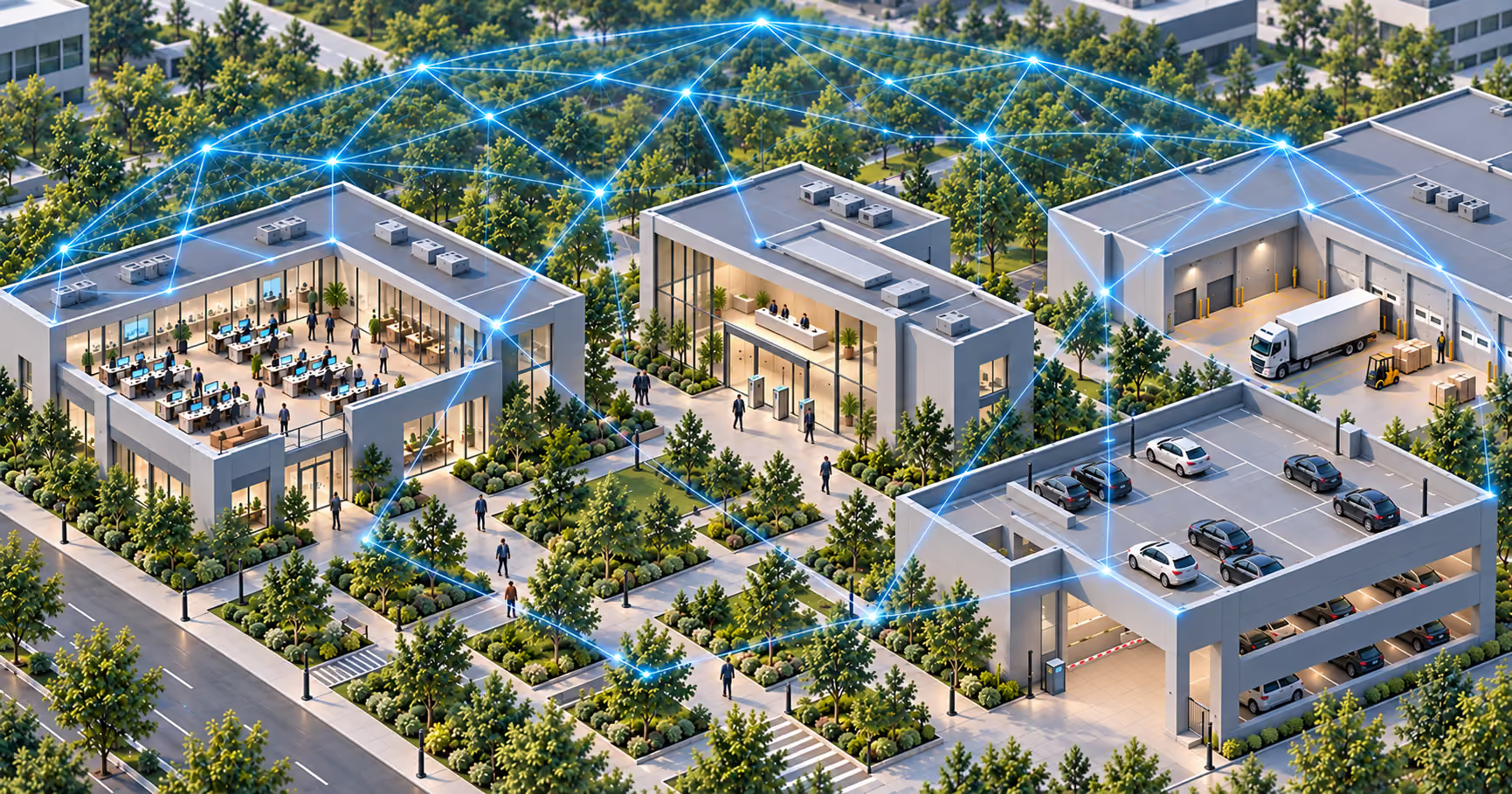
Most enterprise physical security programs were built system by system. A video management system from one vendor. A physical access control system from another. An intrusion detection panel from a third. Each system performed its function, but none of them talked to the others in a way that produced unified intelligence. The result is a security stack that generates enormous volumes of data and relatively little actionable insight — because insight requires context across systems, and context requires integration.
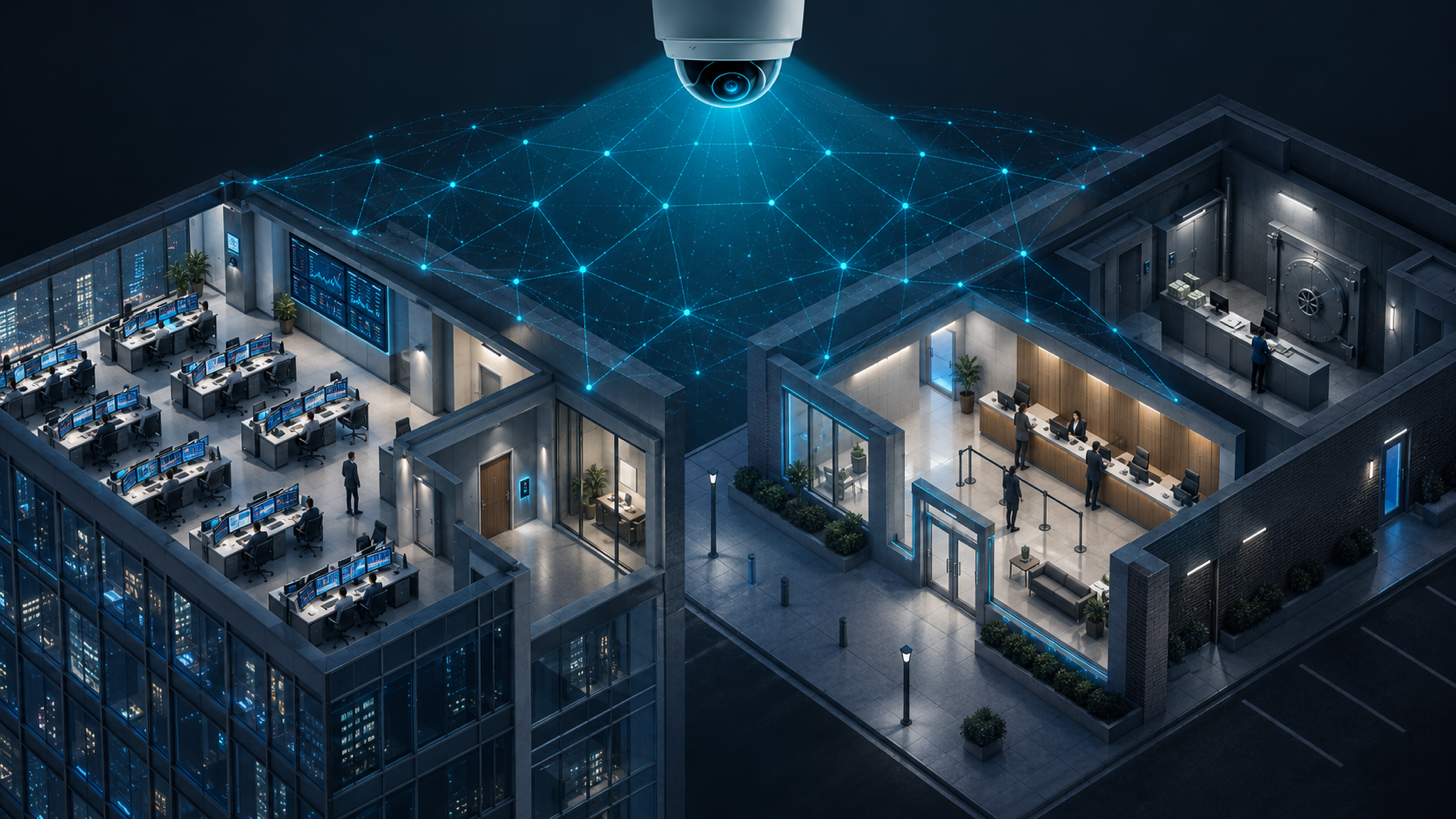
Video surveillance integration is the process of connecting camera networks, access control systems, sensors, and analytics platforms so that events from one system can be correlated with data from others. Done well, it transforms a collection of siloed tools into a unified intelligence layer. Done poorly, it creates brittle connections that break on software updates and multiply the complexity of an already complex environment.
What Video Surveillance Integration Actually Means
The term covers a wide range of technical relationships. At the most basic level, integration means that a VMS can display access control events alongside camera feeds — so when a door alarm fires, an operator can see the corresponding video without switching systems. At a more sophisticated level, integration means that AI can automatically correlate a PACS event with live video, verify whether it represents a genuine security concern, and either auto-clear the alarm or escalate it with full context before a human ever sees it.
The gap between these two descriptions — event display versus intelligent verification — is the gap between integration as a feature and integration as a capability. Most enterprise security programs have the first. Very few have the second.
The Systems That Need to Connect
Enterprise video surveillance integration typically spans four categories of systems, each contributing different data to the unified picture.
Video Management Systems provide the camera feed layer. Integration from VMS to other systems typically means exporting video clips, triggering camera pop-ups on events, or providing API access to live and recorded streams. Integration into VMS means receiving events from access control or sensor platforms and surfacing them in the operator interface.
Physical Access Control Systems generate door-level event data: credential presentations, access grants and denials, Door Forced Open alerts, Door Held Open notifications, and tailgating detections where supported. PACS integration with video is the highest-volume integration most enterprise GSOCs manage. In large deployments, PACS events can number in the thousands per day — the overwhelming majority representing routine activity that consumes operator time without producing security value.
Intrusion detection and alarm panels contribute perimeter and interior sensor data: motion zones, glass break, contact closures. Integration with video enables alarm-triggered camera display and recorded clip export for verification.
Analytics and AI platforms add the intelligence layer. Integration here is architectural rather than event-based: the analytics engine needs access to video streams, and the output of its analysis — validated events, threat assessments, contextual alerts — needs to flow back to operator interfaces and potentially trigger automated workflows in connected systems.
Where Integration Breaks Down in Practice
Most enterprise security integration projects fail not at the protocol level but at the intelligence level. ONVIF and RTSP have largely solved the camera connectivity problem — most IP cameras and VMS platforms can exchange video streams through standardized protocols. The harder problem is what happens after the connection is made.
A VMS that receives a PACS Door Forced Open event and displays the corresponding camera feed has achieved basic integration. But the operator still has to watch the feed, assess whether anything concerning happened, and make a disposition decision. At scale — hundreds of access points, thousands of events per day — this workflow creates the alert fatigue that defines the operational reality of most large enterprise GSOCs.
The integration gap is not connectivity. It is intelligence. The question is whether the platform sitting at the center of the integration can reason about the events it receives — verify them against video context, assess their significance, and route them appropriately — or whether it simply aggregates them for human review.
Protocols, Standards, and What They Actually Deliver
ONVIF (Open Network Video Interface Forum) is the dominant standard for camera-to-VMS connectivity in enterprise deployments. ONVIF profiles define what capabilities are discoverable and controllable across the interface — streaming, recording, device management, and increasingly analytics. ONVIF Profile T, the current generation, adds support for metadata streaming and event notification that earlier profiles lacked.
RTSP (Real-Time Streaming Protocol) handles the actual video delivery — the mechanism by which a VMS or analytics platform pulls a live or recorded stream from a camera. RTSP is widely supported and vendor-agnostic, which is why bring-your-own-camera architectures can connect existing camera fleets to new intelligence platforms without hardware replacement.
On the access control side, there is no equivalent of ONVIF — no universal standard that covers PACS-to-VMS integration across all vendors. Most enterprise integrations are built on vendor-specific APIs, with platform providers maintaining certified integrations with specific PACS vendors. The depth of these integrations varies: some support bidirectional event correlation; others provide only one-way event notification with no ability to send verified context back to the access control platform.
The Architecture That Enables Intelligent Integration
Unified video surveillance integration that actually reduces operator burden requires an architecture where the intelligence layer sits between raw events and human review — not downstream of it.
In practice, this means an AI platform that receives camera streams and PACS events simultaneously, applies behavioral reasoning to assess what actually happened, and delivers verified, contextualized incidents to operators rather than raw event notifications. The operator's role shifts from manually triaging every alarm to reviewing a much smaller set of validated events that genuinely require human judgment.
This architecture is what distinguishes integration as a capability from integration as a feature. The systems are connected either way. The difference is whether the connection produces intelligence or just aggregation.
How Ambient.ai Unifies Video Surveillance Integration
Ambient.ai's platform is built around the integration architecture described above. Rather than adding a VMS feature or an analytics bolt-on, it operates as the intelligence layer that sits across existing cameras, VMS platforms, and PACS deployments — receiving data from each, reasoning across all of it, and delivering unified, verified incidents to security teams.
The AI-native video management approach means Ambient Foundation connects to existing ONVIF-compliant cameras through its Bring-Your-Own-Camera architecture, without requiring hardware replacement. Bidirectional PACS integration with 10+ leading providers — including Genetec, LenelS2, CCure, and Avigilon — enables the PACS Correlation Engine to automatically verify door events against live video and either auto-clear false alarms or escalate genuine violations with full visual context before they reach the operator queue.
Security teams scale coverage across facilities and regions without proportionally increasing headcount. The staffing model shifts from volume-based monitoring to focused incident response.
What should security leaders prioritize when selecting a video surveillance integration partner?
Evaluate whether the platform can correlate events across subsystems and deliver unified incidents with contextual validation, not just whether it supports the right protocols and APIs for your existing hardware. The integration is only as valuable as the intelligence layered on top of it.