In a Colocation Data Center, Physical Security Ends at Someone Else's Door


See how a security team reads shared spaces
TL;DR
The operator and the tenants of a colocation data center write separate physical security programs, and each one ends at someone else's door. The shared spaces between those doors are the operator's to secure, yet the operator's main record there, the badge log, describes doors rather than the people passing through them. Reading what the operator's own cameras show in those spaces, alongside the access record, gives the operator a view of the floor it is responsible for, short of any tenant's cage, which is why tenants have a stake in it too.
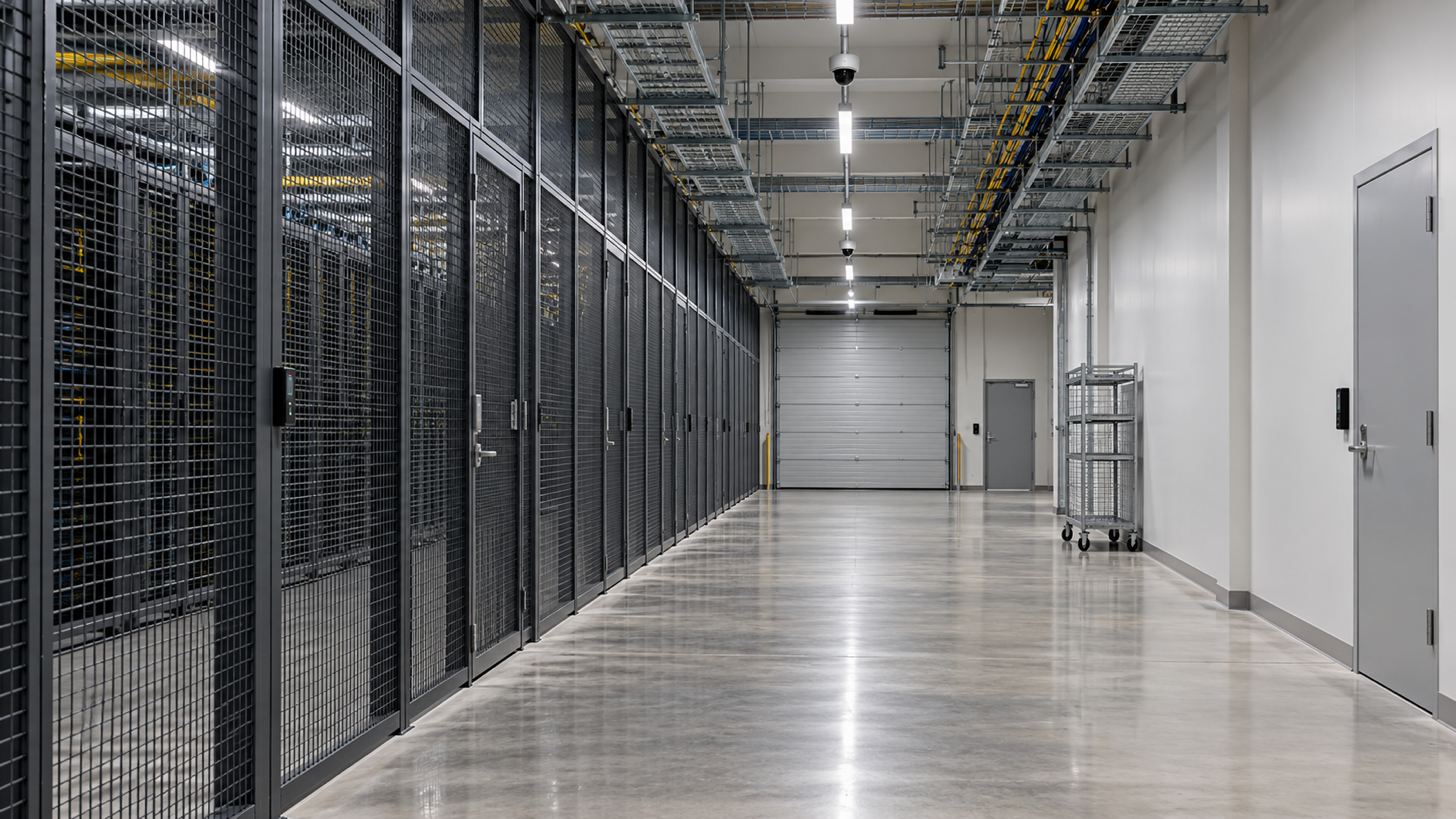
Picture the corridor outside the data halls of a colocation data center on a busy weekday. A tenant's technician heads for a cage as an operator electrician walks toward a panel. A contractor crew waits by the stairwell door with a cart of cable trays, and a courier at the loading dock calls up for someone to sign. Each carries a credential that opens something in the building. On paper nobody in that corridor is out of place, which is what makes it hard to secure.
The operator's program covers the building and its corridors. A tenant's program typically covers its own cage or suite. Both can be sound and still end at someone else's door, leaving the people in between with badges that say what they can open but not whether they belong where they stand.
Who Is Responsible for Physical Security in a Colocation Data Center?
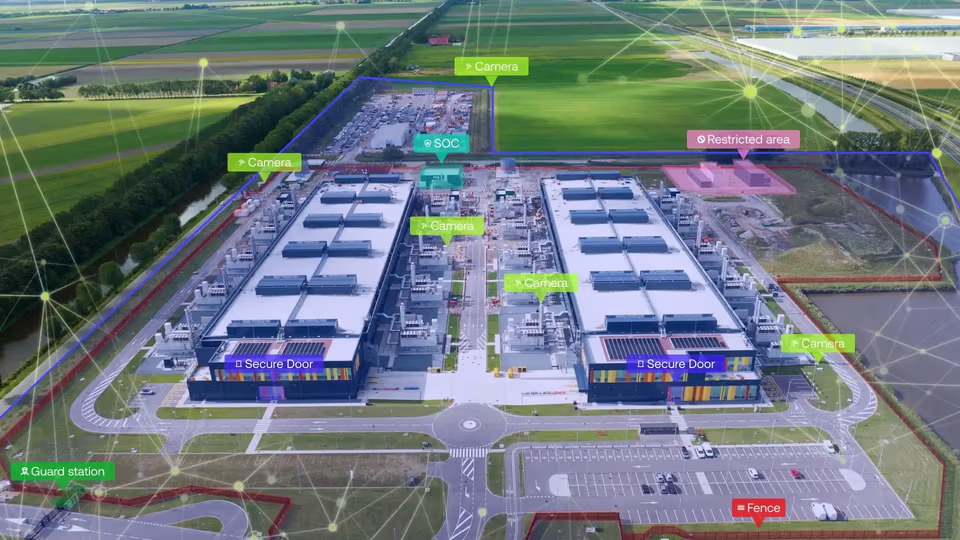
In a colocation data center, the operator is responsible for the perimeter, the building and its shared spaces, from the lobby to the loading dock. Tenants often take responsibility for their own cage, suite or hall, and may add cameras and access control there.
UK guidance hands the data hall to both parties. In 2022 the Centre for the Protection of National Infrastructure (CPNI, now the National Protective Security Authority, or NPSA), with the National Cyber Security Centre (NCSC), published separate guidance for data centre users and owners. The guidance for users tells the customer: "No matter how secure the data centre, as a customer, it is your responsibility to ensure sufficient controls are in place at the data hall to limit who might be able to access your networking equipment." The guidance for owners tells the operator: "Data centre operators are responsible for data hall security. Data customers may have additional security layers. Control of access is especially important when operating shared data centres." Each document tells its own reader that the data hall is theirs to secure. Both are right, and in our view the overlap between them is where multi-tenant data center security gets decided.
The operator's cameras typically watch the door of a tenant's cage or suite rather than the rows inside it. Coverage of those rows is usually added or paid for by the tenant, and the tenant's cameras are generally limited to its own space. Contracts vary, and some operators sell monitoring of tenant space as a service. In the typical arrangement, though, the operator's camera watches the cage door while the tenant's looks only inward, so coverage stops there from both sides.
The Risk Collects in the Spaces Between the Doors
The exposure sits in spaces that belong to no single tenant and serve all of them: lobbies and mantraps, corridors, loading docks, shipping and receiving, and staging rooms. Each can hold operator staff, tenant staff, contractors and visitors at once, including escorted visitors headed to a cage and remote-hands technicians working for a tenant.
The loading dock shows how the pieces fail to fit. A courier arrives with a delivery for one tenant just as its technician comes to receive equipment, while a contractor crew unloads materials for work elsewhere. The operator's procedure governs the dock door and the receiving log. The tenant's takes over once the equipment reaches its cage, and the contractor works under a permit written for another part of the building. No single party's procedure covers all three people on the dock at once.
Meet-me rooms show the difference. The owners' guidance is direct: "Data centre operators should strictly limit access to meet-me rooms." That is carrier space the operator controls, usually escorted, so the technicians inside are there by arrangement, which says more about them than a credential in the corridor outside says about its holder.
In shared spaces operators often worry less about intrusion than about drift: a door propped open while someone waits on a contractor, a gate a work crew passes through unwatched, a staging room left half finished. Where construction is underway, contractors work alongside live operations and the edge of the site keeps moving, at the pace described in how the AI buildout is outpacing data center security. None of these lapses looks like an attack, yet each happens in a space that more than one program touches.
A Valid Badge Records a Grant, Not Who Came Through the Door
Access control answers a narrow, useful question: was this credential granted at this door at this time. In shared space the people present often hold some valid credential, so the answer says little about whether this person belongs here at this moment. The question moves from credential validity to presence and behavior in context. Our reference on data center access control covers zones, credential types and escort rules.
Take a door or mantrap between the lobby and the corridor. When one person badges in and a second follows, the familiar tailgate, the record shows a single grant and not that two people passed, or whether the second belongs beyond the door. When a code fails and entry follows, the record shows a failed attempt and a door event, not who came through. When the door is held open for a crew carrying equipment, the record shows a door held and perhaps an alarm, but not how many crossed or whose crew they were.
In each case the access log is accurate about the door and silent about the people. It is just as silent when a team asks about a person in a room that no door event led to.
Access control is essential in a colocation data center. The Physical Access Control System (PACS) keeps the authoritative record of which credentials were granted entry, and that record is a foundation of every security program in the building. In shared space it is one signal among many, and it is strongest when read alongside what is happening at the door.
Context Has to Come From Reading the Space, Not Only the Credential
Ambient.ai approaches the question of presence and behavior in context as an Agentic Physical Security platform, built on a reasoning Vision-Language Model (VLM) purpose-built for physical security and running on the cameras and access control a site already has. Where the access control system is connected, it reads what the cameras show alongside the access events at the same doors, so a badge read or a door alarm is weighed against how many people are actually present and what they are doing.
With access control connected, the platform reads a single grant at the mantrap together with what the camera over the door shows passing through it, so a second person following the first is seen alongside the single grant. It presents a door held open at the loading dock, or propped open in a staging room, as a scene an operator can judge, with the activity around it in view. The security team still decides what happens next, under the policies it has set, but starts from the space and the people in it rather than from a line in a log.
Whose technician or crew a person is remains a fact the tenant holds, and the operator's view does not depend on it. Where the operator's cameras and access control reach, the platform shows how many people came through a door, whether it was left open and what the camera shows there, which is the part of the problem the operator owns and can act on without waiting on a tenant. It reads the perimeter and the shared spaces and does not extend into a tenant's cage, where coverage stays the tenant's decision.
Reading presence and behavior in context does not replace either party's program. It gives the operator a view of the shared spaces between them, as far as its own cameras and access events reach, which is where securing a multi-tenant data center is often hardest.
The Corridor Between the Doors Does Not Have to Go Unread
An operator and a tenant can each run a good security program while the corridor between their doors goes unread. Whether a given person belongs in that corridor is known to the tenant who sent the technician, booked the courier or hired the crew, and that knowledge often stops at the tenant's door. The operator cannot wait for it and can instead read the corridor itself. Where access control is connected, a door left open or a second person through the mantrap can reach the security team with the scene attached. That matters most where operators commit to their tenants in writing on how quickly they will respond to a security event, because an alarm arriving with the camera view attached gives the person judging it something to start from. The operational side of running many tenants is set out in the blueprint for a modern data center security program.
For operators, the shift is from logging the shared spaces to reading them, with a reasoning layer over the cameras already in place and, where access control is connected, the access events too. For tenants, those shared spaces bear on their own risk, which makes it worth knowing whether their operator reads the corridor outside the cage or only records the door.
An hour later, the corridor outside the data halls is quiet again. The technician is inside the cage, the contractor crew has wheeled its cart to the far end, and the courier's delivery waits in the staging room. Every badge used was valid, and the access log recorded each correctly. Alongside that log sat a view of the corridor itself, one that shows the people as well as the doors.

Key Takeaways
Each program ends at someone else's door. In a colocation data center the operator typically secures the perimeter and shared spaces, while tenants often secure their own cage, suite or hall.
Risk collects between the doors. Lobbies, corridors, loading docks and staging rooms are where operator staff, tenant staff, contractors and visitors overlap, and the incidents there are often drift rather than intrusion.
A badge records a grant, not a person. The access record shows that a credential opened a door, not who came through or whether they belong there.
PACS is the foundation, and one signal among many. It keeps the authoritative record of credentials granted entry, and context comes from reading presence and behavior in the shared space alongside it.
Operators can read the space they answer for, and tenants have a stake in whether they do. Where access control is connected, reading camera views and access events together shows how many people came through a door and what is happening at it, within the operator's own coverage and short of any tenant's cage.