Data Center Rack Security: What Happens After the Cabinet Opens



See how a security team watches a single rack
TL;DR
Rack-level security is what a data center watches and knows at a single rack or cabinet rather than at the building, the hall or its doors. A badge record shows which credential opened the door and says nothing about what happened at the rack. One option puts an alert on the rack itself with the scene attached, while the judgment of whether the work was expected stays with the security team.
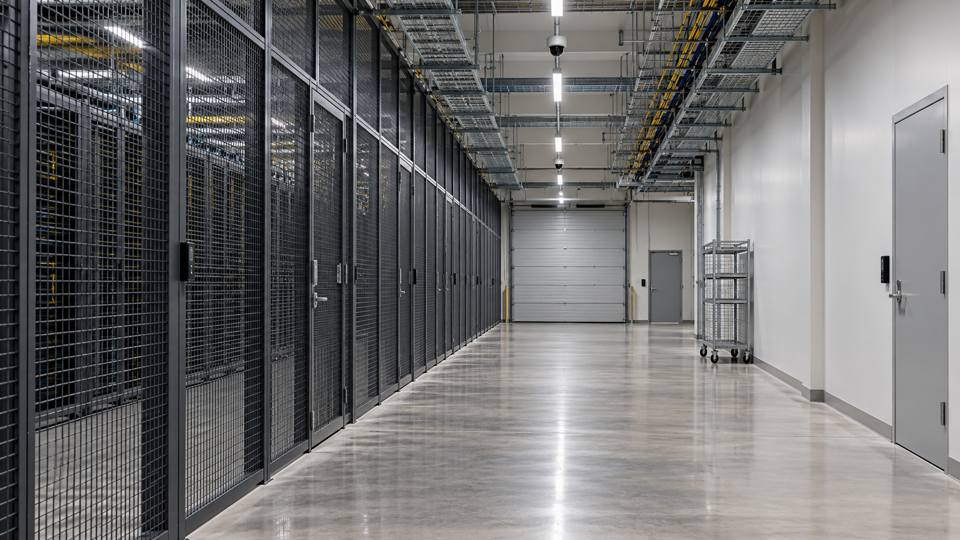
At the end of an ordinary day, someone on a data center security team reads down the access record for one data hall. Every badge read matches a valid credential, and every exit follows an entry. The record is clean. Three rows into that hall stands the cabinet the team would least want anyone to touch. The record holds no line about it, because a reader beside the hall door cannot describe what happens at a cabinet it never sees.
That silence is not a fault in access control, which is doing the job it was built for. It is a question of scope, and it belongs to whoever controls the space around the rack. The decision in front of the security leader for that space is how far past the door the team's attention should reach.
A Badge Gets a Person to the Rack and Records Nothing After That
An access record holds a short list of facts: a credential presented at a reader, the door, a time, and a grant or a denial. Those facts establish who could reach a space and when. The record has no line for what happened after the door closed, such as a cabinet opened, a server slid out on its rails or a cable pulled from a switch. Our reference on the layered zones of data center access control covers the zones a badge passes through, and most of them end at a door rather than at a rack.
One publicly reported case shows the pattern. In a 2025 criminal case in Northern Virginia, prosecutors said a worker removed components from the chassis of computers, kept them with personal items and walked out with them at the end of shifts, according to local press reports. The account describes a person who was allowed to be in the room doing something to computer equipment. Publicly reported cases of this kind are few, and the argument here is not that they are common but that when one happens, the access record is not where it shows.
Government guidance names the rack as a unit of attention. In its guidance for data centre users, written with the National Cyber Security Centre (NCSC), the National Protective Security Authority (NPSA) advises: "Whether you are using network equipment racks within a shared hall, suite, or your own floor/hall, you should consider measures to detect and verify unauthorised access to your rack". The guidance sets the aim. What counts as that kind of access at a particular rack is still the owner's call, because the facts that settle it sit with the owner.
Who Is Responsible for Security at the Rack in a Data Center?
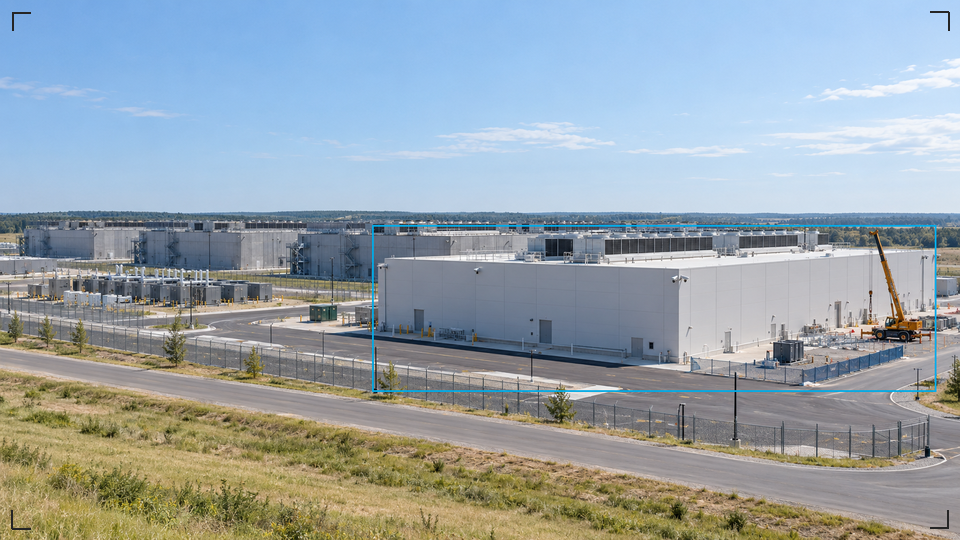
Responsibility for security at the rack typically sits with the organization that controls the space around it. In a building it owns, that is the owner. In a colocation building, it is whoever controls the hall, suite or cage the rack sits in, while the building's operator typically secures the building itself.
The 2022 senior leaders' guidance for data centre users from NPSA and the NCSC addresses the user directly: "You may need to discuss the option of implementing your own detection layers to maximise opportunities for detection at rack, room or hall level." Our reading is that rack-level security is built by the space owner rather than supplied by the building.
Take the same rack in three settings. In an enterprise server room, the company's own security team typically holds the cameras. In a hyperscale or AI-cloud company's own data hall the same holds, across halls and cages that multiply with the pace of the AI buildout. In a tenant's cage inside a colocation building, the operator's camera typically watches the cage door. Coverage inside the cage is usually the tenant's to add, though contracts vary, as the boundary between operator and tenant in a colocation data center makes clear. In each setting the camera facing the rack has a named owner, and that owner decides whether the rack is watched at all.
Rack Monitoring Has to Watch the Rack, Not Only the Room
Once a space owner decides a rack is worth watching, the next question is what watching it should mean. Footage of the whole hall that nobody reads while work is happening is background rather than coverage. Four requirements follow from the gap the access record leaves, and they hold for any rack-level setup:
- Watch the specific rack, not the whole room.
- Recognize what a person does at the rack, not only that someone is there.
- Catch the entries a badge read cannot account for.
- Put the scene in front of a person who can judge it.
Picture someone opening a cabinet at the end of a quiet aisle. Where Ambient.ai covers that rack, the security team gets an alert with the scene from the cabinet attached, and the team decides what it means. Ambient.ai is an Agentic Physical Security platform that runs on the cameras and access control a site already has, adding a reasoning layer instead of replacing anything. Its reasoning Vision-Language Model (VLM), purpose-built for physical security, looks for specific behaviors, which Ambient.ai calls threat signatures, rather than for motion.
The first requirement is to watch the specific rack that matters, which makes camera placement part of the design. The threat signature for hands-on interaction works best with a clear, close view of one rack, such as a camera angled at the cabinet face at the end of a quiet aisle, where a person's hands on the equipment stay visible. Placing the camera with that view in mind, clear of foot traffic and of the equipment and cabling that can crowd a full rack, deserves as much attention as the detection itself.
The second is to recognize what a person does rather than only that someone is there, because people pass racks all day in a working hall. Ambient.ai's threat signatures look for the behavior itself, such as a person interacting with a secure asset like a rack a camera covers, or a visible bag or case carried out of a secure room.
The third is to catch the entries a badge read cannot account for. The access record trusts the door, so a door forced, held or propped open can let someone into the hall without a badge read of their own. Where access control is connected, Ambient.ai reads door state together with the camera view and flags a door to a hall or secure room that is forced, held or propped open, as well as a person entering through a door that was forced or propped, each with the scene attached.
The fourth is to put the scene in front of a person. Ambient.ai sends each alert to the security team with what the camera saw attached, so whoever judges it begins with the scene itself, such as the cabinet and the hands on it, rather than a timestamp to reconcile against footage.
Whether an Alert Matters Is a Judgment Only Your Team Can Make
An alert shows what the camera saw at the cabinet. Deciding whether that work was expected draws on facts the security team already holds: what maintenance was scheduled for that hour, which ticket sent a technician, whose equipment sits in the rack and who the person is. What the team often lacks is a timely view of the rack, which is the part the platform supplies.
Take one alert at the same cabinet on two afternoons. On the first, the scene shows a technician at the open cabinet, and the team's own records turn up the ticket that explains the work. On the second, someone else is working at the same cabinet and nothing in the team's records accounts for the visit. There the scene is the first thing an investigator needs, and it is already in hand. The alert was the same kind both times, and the different answers came from what the team knew rather than from anything the platform decided.
Not Every Rack Needs a Camera on It, and Choosing Which Do Is the Work
For many racks, a record of who entered and left is enough. The camera a colocation operator typically places at a cage watches entry and exit, and some space owners reasonably want nothing more from a given room. The argument is narrower, because some racks deserve a kind of attention that the door cannot give.
Sorting a hall comes down to two questions about each rack. Would a hands-on event there matter enough to want to know as it happens, and can a camera see the rack with a clear, close view, away from foot traffic? The core network cabinet or a rack serving a regulated workload may pass both, while a cabinet of spares may need nothing more than the door. Seen this way, data center cabinet security is decided one cabinet at a time, which is the part of the wider gaps in data center physical security that sits with the space owner.
Step back from the individual racks and the larger picture is straightforward. Access control was built to answer who could reach a space, and it answers that well. It was never meant to say what happened once someone was there, and for the racks that matter, that is the part a security leader is accountable for. Ambient.ai carries the work of securing a data center past the door and down to the rack, without asking a team to rebuild what it has. On a rack a camera covers, it recognizes hands on the cabinet, and where access control is connected, it recognizes a door forced or propped open. In both cases it puts that scene in front of the people who hold the tickets, the schedules and the judgment. The record at the door stays as clean as it was, the racks a team chooses to watch get attention of their own, and every decision about what a scene means is still made by the team that owns the space.

Key Takeaways
A badge gets a person to the rack and records nothing after that. An access record holds a credential, a door, a time and a grant or denial, and nothing of what a person did at the rack.
Whoever controls the space around the rack decides what watches it. That is the owner in its own building, and in a colocation building whoever controls the hall, suite or cage.
Rack monitoring has to watch the specific rack. A clear, close view of the rack in a quiet aisle matters as much as the detection itself.
Ambient.ai extends attention past the door, and the judgment stays with the team. On the cameras a site already has, and on its access control where that system is connected, it alerts on threat signatures such as hands-on interaction at a rack a camera covers or a door propped open, with the scene attached, and the team weighs that scene against the maintenance and tickets it already knows about.
Not every rack needs a camera on it. Entry and exit records suffice for many racks, and the ones worth watching are those where a hands-on event would matter and a camera can see clearly.