The Smart Approach to Loitering Detection in Enterprise Security



Investigations that took days. Now answered in seconds.
Loitering detection enables security teams to identify threats before they escalate into incidents. Someone lingering near a loading dock, pacing along a perimeter fence, or repeatedly approaching a secure entrance often signals intent that precedes theft, vandalism, unauthorized access, or violence. These behavioral patterns create intervention windows, but only if detection is accurate enough to act on.
Effective AI-powered loitering detection goes beyond simple time thresholds. It analyzes context, behavioral patterns, movement characteristics, and environmental factors to distinguish someone waiting for a ride from someone casing your facility.
Traditional systems flood operators with false alerts or miss genuine pre-incident behavior entirely because they lack this contextual understanding. For security teams managing large facilities, the challenge is clear: detect meaningful loitering without drowning in noise.
Why Loitering Detection Matters for Enterprise Security
Loitering is a behavioral precursor that can signal intent before an incident unfolds. Identifying individuals lingering near restricted areas, entry points, or high-value assets creates intervention opportunities, but only if detection is accurate enough to act on.
Recognizing Reconnaissance Patterns
Behavioral patterns often emerge before incidents occur. Individuals case facilities during business hours to understand guard patterns, camera coverage, and Physical Access Control Systems (PACS) routines. This reconnaissance phase creates critical intervention windows.
Loitering is among the most reliable precursor behaviors in physical security. Unlike active threats that require immediate response, loitering creates intervention windows in which security teams can engage before situations escalate, turning potential incidents into prevented incidents.
Common reconnaissance indicators include:
- Repeatedly lingering near loading docks, which may signal planned cargo theft
- Extended presence near executive parking areas, which could indicate targeted surveillance
- Unusual dwelling at perimeter fences, which often precedes break-in attempts
The financial and human stakes matter. Early behavioral detection prevents incidents and associated costs, from workplace violence to insider threats. PACS vulnerabilities, such as tailgating and propped doors, create security gaps that detection can identify before exploitation.
The Problem with Traditional Loitering Detection
Static Rules Generate Endless False Positives
Rule-based systems cannot reliably distinguish between legitimate waiting and concerning behavior because they rely on simple motion and dwell-time triggers without understanding intent, environmental context, or location-appropriate activity. Employees on breaks, visitors checking phones, and delivery drivers waiting for signatures are indistinguishable from genuinely suspicious behavior in these systems.
Traditional video surveillance analytics detect presence but not purpose. A person standing near a perimeter fence during off-hours generates the same alert as someone standing in a lobby during business hours. Both exceed a time threshold, but the risk profiles couldn't be more different.
The Operational Burden of False Positives
Rule-based systems generate excessive false positives in large facilities. This overwhelming false positive rate erodes trust in the system. Teams face alert volumes that create cognitive fatigue and degrade monitoring performance.
Context blindness creates a cascading problem. Operators receive alerts without the environmental intelligence needed to assess severity. Is this person lingering in an area where waiting is unusual? Are they exhibiting directional attention toward restricted access points? Rule-based systems provide none of these contextual answers.
The inability to distinguish intent means every stationary person becomes a potential alert. Someone waiting for a colleague in the lobby generates the same system response as someone surveilling entry procedures. Weather conditions create additional false positives: people sheltering from rain or waiting under awnings during storms overwhelm operators with meaningless alerts.
How Contextual Reasoning AI Improves Loitering Detection Accuracy
Contextual Reasoning AI and behavioral analysis deliver a significant reduction in false positives compared to motion-based systems, while maintaining detection accuracy for genuine threats.
This performance improvement stems from fundamental architectural differences in how these systems process and interpret video data.
Behavioral Analysis Beyond Time Thresholds
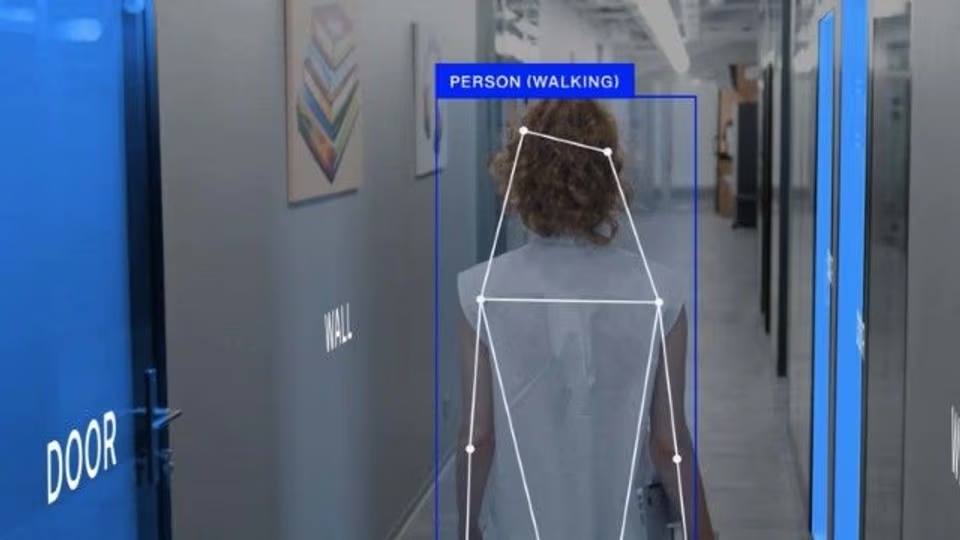
Computer Vision Intelligence evaluates patterns such as pacing, repeated approaches, and attention toward entry points alongside duration.
Rather than triggering solely on dwell time, contextual AI systems analyze movement patterns suggesting reconnaissance or surveillance intent. Someone pacing near a restricted entrance, photographing cameras, repeatedly glancing at PACS readers, exhibits behavior fundamentally different from someone standing still while looking at their phone. Both may exceed time thresholds, but only the former suggests concerning intent.
Pattern Recognition Over Time
This pattern recognition extends beyond single moments. Computer Vision Intelligence tracks how individuals move over time, measuring duration while filtering out legitimate waiting behavior. Systems recognize behavioral chains, such as testing doors, surveilling entry patterns, and returning with implements, that indicate escalating threat.
The operational impact shifts security operations from alert triage to proactive intervention. Operators can trust the alerts they receive because the system understands context, not just presence.
Scene-Aware Intelligence
Advanced systems understand location context through behavioral pattern recognition and environmental awareness. This means lingering near a perimeter fence during late-night hours triggers a different assessment than someone standing in a lobby during business hours. The system distinguishes between brief legitimate presence and concerning behavior by analyzing dwell duration, movement patterns, and time-of-day context specific to each location.
Environmental awareness filters weather-related motion and benign activity that would trigger traditional systems. Zone-specific rules understand location-appropriate behavior, applying different thresholds to high-traffic public areas versus restricted zones. Adaptive learning improves accuracy over time as systems learn normal patterns for each monitored area.
How Ambient.ai Delivers Intelligent Loitering Detection
Ambient.ai, the leader in Agentic Physical Security, uses breakthrough purpose-built reasoning AI to identify behavior that genuinely indicates risk. The platform surfaces verified alerts in real time, enabling early intervention before situations escalate.
The platform processes video through Vision-Language Models trained to recognize over 150 threat signatures. Loitering detection analyzes the behavioral chain from reconnaissance through escalating threat indicators, giving security teams visibility across the entire incident lifecycle.
Integration with Existing Infrastructure
The Ambient platform connects to existing camera infrastructure through standard protocols — no camera replacement required. Integration with PACS means you can deploy this intelligence layer across cameras already installed.
Ambient operates without facial recognition or personally identifiable information, meeting modern privacy expectations while delivering behavioral intelligence that traditional surveillance cannot achieve.
Ambient Intelligence, the core AI stack of the Ambient platform, tracks individual positions over time, analyzing movement patterns, spatial relationships, and contextual factors that distinguish legitimate waiting from surveillance behavior. Teams resolve more than 80% of alerts in under one minute, enabling intervention during the critical window that loitering detection creates.
For security professionals managing extensive camera networks, this represents the shift from drowning in false positives to receiving actionable intelligence that enables proactive response. The evolution from motion detection to behavioral intelligence is the shift to proactive incident prevention that security leaders need.
Key Takeaways
- Loitering is among the most reliable precursor behaviors in physical security, creating intervention windows before incidents escalate
- Traditional rule-based detection generates excessive false positives because it relies on time thresholds without understanding intent or context
- Contextual AI analyzes behavioral patterns, movement characteristics, and environmental factors to distinguish legitimate waiting from surveillance behavior
- Scene-aware intelligence applies different thresholds based on location, time of day, and zone-specific activity patterns
- Effective loitering detection shifts security operations from reactive alert triage to proactive incident prevention
Frequently Asked Questions About Loitering Detection
What is loitering detection in physical security?
Loitering detection identifies individuals who remain in a specific area longer than expected, particularly near sensitive locations like entry points, perimeters, and restricted zones. Effective systems go beyond simple time thresholds to analyze behavioral patterns, movement characteristics, and environmental context to distinguish concerning behavior from legitimate waiting.
Why do traditional loitering detection systems generate so many false alarms?
Traditional systems rely on motion and dwell-time triggers without understanding intent or context. They cannot distinguish between employees on breaks, visitors checking phones, and individuals conducting surveillance. This generates excessive false positives that erode operator trust and create cognitive fatigue that degrades monitoring performance.
How does Ambient.ai approach loitering detection differently?
Ambient.ai uses Vision-Language Models trained to recognize behavioral patterns like pacing, repeated approaches, and attention toward entry points. The platform analyzes the behavioral chain from reconnaissance through escalating threat indicators, operates without facial recognition, and integrates with existing camera infrastructure to deliver contextual intelligence.